hmmmm okay i really want to talk about the session i was at at the conference that discussed how venus fly traps evolved from sundews but im not sure if i remember it correctly. all the data from that symposium + more is published in this new book reviewing all the modern work on carnivorous plants called Carnivorous Plants: Physiology, Ecology, and Evolution. now on one hand, its incredibly fascinating stuff and id love to have my own copy. on the other hand, its $100 and im poor. on another other hand, my library at school has a copy and i can wait to talk about it. unless i want my own copy to add to my expanding aesthetically pleasing collection of botany books. and ill need to wait a month to talk about it. and it’s a fairly long textbook for the price, some 500 pages, which really isnt bad. and i love them. and i have a job so like i wont die immediately. and i got some money for my birthday. but its still 10 hours worth of work. but maybe its worth it. and its really new research. an
good lord the table of contents alone is 15 pages long
i had to order my textbooks for school anyway so i may or may not have indulged and just lumped it in with all the other expensive books i had to buy……..supplemented with some money i got from work/for my birthday….worth it? we’ll soon find out
when i get it ill use it to verify the stuff i remember from the conference and make a post on how we think venus fly traps evolved
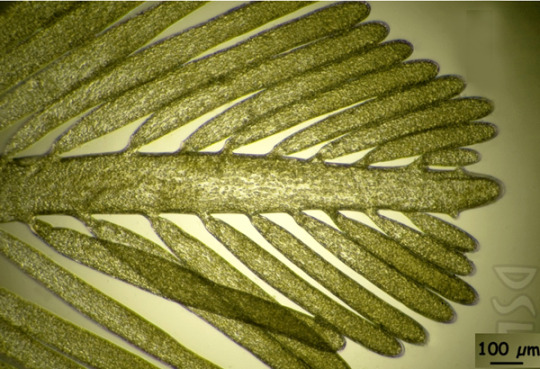
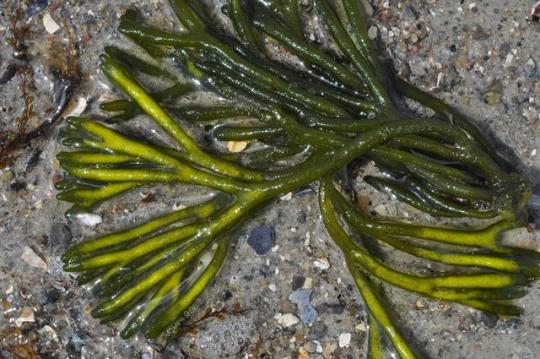
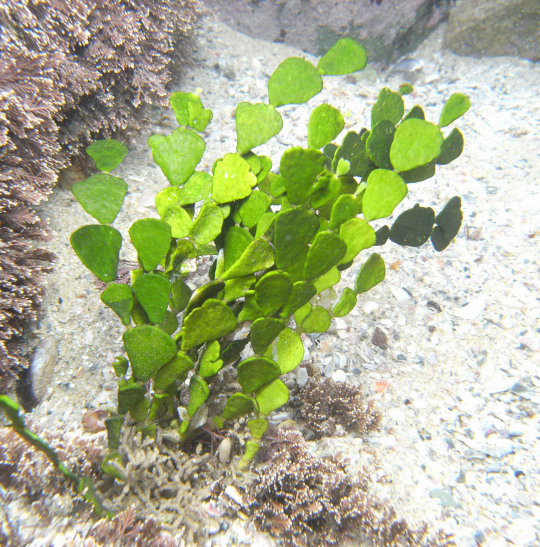
I see doubt in the notes so just wanted to say that YES, this is a unicellular organism! This is a species from a genus of green algae called Caulerpa, which are a siphonous algae. The frond shapes, the “rhizomes” it grows from, and the “roots” it extends into substrate are all extensions of a single multi-nucleate cell. Here’s what a siphonous alga looks like under a microscope, with no divisions in its cytoplasm:
It’s not the only algae like this, either! Caulerpa is a member of order Bryopsidales, which are all siphonous. Here’s some more macroscopic single cell algae:
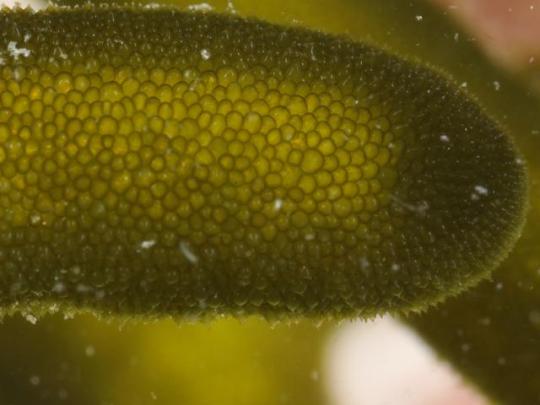
Codium fragile, or dead man’s fingers. This one is a single long noodle of a cell with swollen growths on the outside called urtricles, packed together to create a firm “skin.”
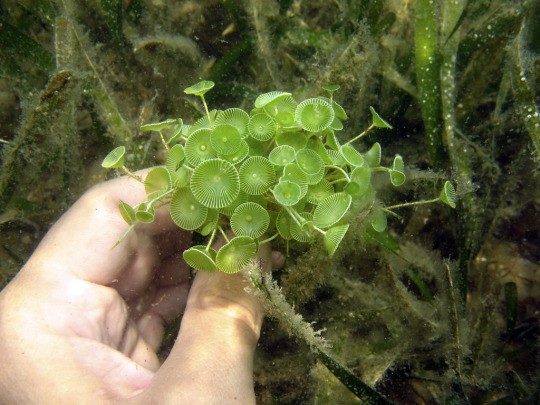
Halimenia, a calcified algae whose shed growths are responsible for a lot of the beautiful white sand on tropical beaches:





 DarkestElemental616