Soot tags gather after fires in areas with low circulation. They are not, as commonly believed, ash covered spider webs.
oh, well then what the FUCK are they???
They’re made of sticky particles from a polymer or petroleum based fire, like burning carpet, drapes, upholstery, and clothes. Due to a static charge, they chain together and naturally gather near ceiling corners because the rising hot air pushes them into the cool spots by convection.
Because they’re formed by static electricity, they can only be removed with professional chemicals and equipment. Attempting to remove them improperly will only break the chain before all the soot can be captured, leaving the remaining soot to spontaneously reform the webs later. Even worse, trying to wipe or wash them away can firmly adhere the soot to your wall or ceiling, which will permanently stain it.
A natural phenomena that only coincidentally resembles the damned webs of transdimensional ghost spiders.
you leave the transdimensional ghost spiders alone, they’re doing a great job
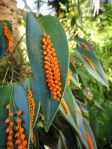
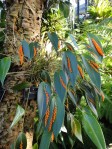
These rebellious young whipper-snapper-damn-“Millenials” are most definitely orchids. Don’t worry though, even though their racemes make them look like a back-talking pierced-tongue millenials, they aren’t capable of destroying any of our hard-won industries, primarily because they are “orchids” according to what Rush Limbaugh and Tomi Lahren said this morning, and are not, infact, millennials.
I however am still skeptical. Just look at them! With so many tongue piercings, I can’t fathom how they could be anything BUT millennials. They could be the very death of our Fabric Softener Industry. Just think of how the Diamond-encrusted Gold Watch Industry would suffer if all of the piercings are on their tongues! These millennials just obviously don’t know how to spend their money properly.
(Not my images, darlings. For these and other lovely orchids, check out Ruben Senes’s Flikr, here )
P.S. These are not actually images of millennials. Please note that these are plants and therefore have no money to spend improperly.
so metropolitan museum of art has a register of books they’ve published that are out of print and that you can download for free! they’re mostly books on art, archeology, architecture, fashion and history and i just think that’s super useful and interesting so i wanted to share! you can find all of the books available here!
Here is the final illustration of the Managarm wolves for those of you who have been following me on instagram/ Facebook (I tend to ask many questions to my followers there) 🤗🤩 Thank you again for helping me with this. It will be available on my shop soon. (sorry for the double post, i kinda messed up the other one XD )
i’ve gotten a few responses here asking for some clarification on this paper and why making essentially squishy plants was important enough to make it into the plant science section of nature, one of the most influential journals in the world, and i’d be happy to oblige and break this down a little!!
so to start off, plants have two kinds of membranes around their cells, while animals only have one. one of these is called the ‘plasma membrane’, which is a soft, squishy kind of membrane that we have as animals that just kind of holds everything in. the other kind that only plants have is called a ‘cell wall’, which in plant cells surrounds the plasma membrane to basically hold everything in even more, and is really rigid and hard instead of squishy. the cell wall is made of a strong substance called ‘cellulose’, which you prob have heard of before, which acts as a really strong support structure to hold up the plant and protect the cells. the cell wall has a lot of different functions, but one of the main ones is structural; the pressure between the cell wall and the water inside the plant’s plasma membrane forming ‘turgor pressure’, which keeps the plant upright (when a plant needs water, it’s turgor pressure goes down, and there isn’t enough water in the cells to push against the cell wall to hold it upright. this is what causes wilting!)
now here’s the problem with cellulose: it’s a BITCH to break down. in settings where people are trying to make biofuels and renewable oils from algae and plant materials (and being successful in limited amounts!!), cellulose is the biggest thing keeping the process from higher efficiency, making it harder for those techniques to keep up with fossil fuels. but removing the cell wall altogether wacks out the plant’s turgor pressure, upon which a TON of natural processes and biological functions in plants are based (turns out that maintaining water pressure is really important when you dont have like, blood to keep stuff going!! or a heart to move shit around!!). so we need some kind of hard thing for the plant cells to push against to keep up hydraulic pressure, but it cellulose is too hard for efficient use in sustainable fuels.
which brings us to this study. im sure u can tell where this is going now. basically, these researchers were like, ‘what if we just added a second plasma membrane?? so its like, thicker, but there’s no cellulose???’.
this worked well. like, really well. i have made an annotated version of some of their results:
so in conclusion: this is a really cool paper, and not only did it show that it could be done, but they actually identified a ton of genes and transcription factors that could be modified to make replacement of a plant cell wall possible by other people.
this is a huge generalization, of course- they have way more data in the paper here if y’all wanna see it for themselves– but overall??? this technology could be really big in increasing the viability and efficiency in biofuels and sustainable biochemicals to be used in stuff like cosmetics, fabrics, plastics, etc.










 DarkestElemental616