I’m 85% sure Batman has really really bad Obsessive Compulsive Disorder.
Not, “keep things tidy” or “wash my hands until they bleed” but, like, his obsession with being Batman and fighting crime is driven by fear. The repeating thought of “if I don’t become this bat vigilante then people will die” is… irrational. But he doesn’t see it that way. He trains. He can’t not train. If he doesn’t then people die. He pushes himself to the brink of death, pushing himself beyond the limitations of his body because if he relents for just a moment people will die. It’ll be his fault. He needs to be out on the street every night. He needs to train every day.
Without people like Alfred, his obsession would’ve killed him within the first year. That’s not normal. He literally cannot stop himself from going out and fighting crime. He tried to stop being Batman before, but he always come back to it. He’s too afraid. He needs to be Batman. It’s all he thinks about.
By all means he should be dead. He’s basically insanely smart and lucky.
Thinking he’s personally responsible for the deaths in Gotham is his obsession. His compulsion is to train all the time and to go out every night to fight criminals.
Batman definitely has obsessive compulsive disorder.
Other examples of his irrational ways of thinking include
“I need to be miserable and alone.”
“Using a gun makes me as bad as the serial killers”
“Killing no matter the circumstance will turn me into someone like the Joker.”
In a DC Nation comic they put multiple hero’s sanctuary files, Batman being one of them, and at the bottom listed their diagnoses conditions.
Y’all realize poor eyesight (aka needing glasses) is an actual disability right?
Its simply one our society has normalized and made accommodations for. Its one you can function with at virtually no impairment for most because its easy to get glasses/contacts and enough people need them that we’re taken into account.
People laugh at the concept of needing glasses being a disability, but that’s because its become the standard to see disabilities only as things extremely difficult and unbearable to live with, or things that aren’t for “normal people.”
That’s wrong. How life is for people with glasses is how life should be for people with any other kind of disability – normalized, unstigmatized, unquestioned, accommodated, with resources made available.
It should be just as easy for someone in a wheelchair to have access to things that make life functionally indifferent from people without wheelchairs – just like living with glasses is for most.
Society needs a redefinition of disability – or, scratch that, they need reorienting on what “disabled” looks like and how life should be for disabled people. Being disabled isn’t defined by its hardships – it is a state of being that is unfortunately 99% accompanied by ridiculous hardships because society refuses to accommodate and still thinks they don’t have to because to them, its a simple fact that “being disabled is hard.” Why should they change?
A disability is something that leaves you at a disadvantage, in pain, non functional, etc. without some sort of aid.
Without glasses I could not drive or work, and it would severely impair my ability to even be social. You know what else does that? My other disabilities that are considered “real disabilities.”
You know what aid I have ease of access for? The thing not considered a disability. And I’d bet money that’s a direct reason why.
^ ^ ^ ^ ^ ^ ^ All of this.
i will say, that while glasses are certainly normalized, cost=wise there’s definitely barriers to getting tests, different kinds of prescriptions, quality of frames and lenses etc. that being said, everything else is spot on.
^^ op is extremely correct and so is this comment. a significant number of latinx and black children in impoverished school districts don’t have the funds to pay for tests and prescriptions. this has turned out to be one major factor that affects these students’ performance in school and, more importantly, their ability to learn in a classroom they cannot see well in. it’s not just abt normalizing accommodations, but making them accessible to everyone!
Another thing with how normalised glasses are: no one thinks twice about people only needing them sometimes, or only needing a very weak prescription. But someone who only needs a wheelchair sometimes? Or who could technically manage without one but everything would be harder? That’s controversial. It needs to not be controversial.
The thing that gets me about most arguments against accessibility features in video games is that they’re not just grossly ableist, they’re also hypocritical as hell. Video games have always had accessibility features: we just documented them poorly and called them “cheat codes”. Indeed, having a robust library of difficulty-modifying cheats was considered a mark in a game’s favour! The only difference is that a cheat code is theoretically a secret, which allows it to be framed as elite knowledge, even though it’s functionally identical to having an “infinite lives” switch on the options screen.
Here’s a thesis for you: the Konami Code was the first well-publicised accessibility feature.
being bad at video games is a disability now?
I’m going to assume you’re not being disingenuous here and take this as a serious question. In brief, very few people are generically “bad at video games”; in most cases, difficulty engaging with interactive media stems from one or more of a wide range of physiological conditions, including:
visual deficit (including colourbindness; colourblind individuals often have difficulty identifying threats in action games because they don’t stand out from the background for them)
repetitive strain injury in the hands, wrists or forearms (common for anyone who performs manual labour for a living)
arthritis and other degenerative joint conditions (both those due to age and those comorbid with many autoimmune disorders)
dyslexia (a common symptom of even mild dyslexia is the inadvertent mirroring of sensory-motor responses under pressure, e.g., moving your hand left when you meant to move it right – which is a big problem for action games!)
sensory processing disorders (delayed reaction to visual stimulus is a common symptom)
spatial processing disorders (see above)
chronic pain
propensity for motion sickness
This is, of course, only a partial list. Many of these issues are individually rare, but taken together, we’re looking a huge chunk of the population – up to 40%, by some estimates – who have at least one condition that would impact their ability to play the shooters and action-platformers that are held up as the gold standard for hardcore gaming.
hot tip: if your disability makes you bad at a thing, maybe either put in the extra effort to get good at it or just don’t do it instead of demanding people make the thing easier?????
Here’s the a better question: why is it an issue for you? Accessibility features in video games are entirely transparent to those who choose not to use them. Your experience of play isn’t affected by their existence in any way whatsoever unless you deliberately turn them on. Complaining about the mere existence of such features is like claiming that your viewing experience of a movie is being ruined by the fact that the disc has a subtitle feature on it, even though you haven’t actually turned subtitles on.
(And no, don’t try to frame this as video game developers somehow being victimised by unreasonable demands. The vast majority of developers are more than happy to include accessibility features in their games – and quite sensibly, because, you know, they’re businesspeople, and they want to sell things to as wide an audience as possible. The popular backlash against accessibility features is entirely on the player side.)
i just want to appreciate the genius in this thread who unironically typed what amounts to “if your disability makes you bad at a thing, try being good at the thing instead”
*try ti play a game and die multiple times cuz I enter in panic everytime I hear the intense music* I guess I have to get better at this ._.
Just for once I’d like to tell the gate agents and flight attendants that my folding wheelchair is going into the onboard closet and not have them tell me there’s “no room”. Bitch that’s a wheelchair closet, not a “your bags” closet. Move your damn bags where they belong.
Ok, so according to my friendly aviation expert, this is a Big Fucking Deal. In fact, if an airline argues with you about putting your wheelchair in the wheelchair closet or even suggests there may not be room, unless there is already anotherpassenger’swheelchair in that closet, they have violatedfederallaw.
CFR Title 14, Chapter II, Subchapter D, Part 382, Subpart E, Section 382.67, Subsection (e)
“As a carrier, you must never request or suggest that a passenger not stow his or her wheelchair in the cabin to accommodate other passengers (e.g., informing a passenger that stowing his or her wheelchair in the cabin will require other passengers to be removed from the flight), or for any other non-safety related reason (e.g., that it is easier for the carrier if the wheelchair is stowed in the cargo compartment).”
This is hugely important because it means that if this happens to you, you should report their asses to the DOT. Why? Because these statistics are published every year for every airline, and the airline gets a huge ass fine for every violation. If we want to see change, we need to make airlines literally pay every time they treat us this way.
@annieelainey you should share this with your followers! This is important info!!
To my mutuals on wheels, print out the law before you fly and whip it out at the gate if they don’t accomodate your wheels.
Thanks a lot for posting this, bro! Flying while crippled is already difficult enough without people pulling this kind of shit. Also, make sure that if there is a piece of your wheelchair or something important missing off of it, that you make a big fucking deal out of it! I’ve had pieces fall off of my wheelchair and nearly lost a decoration I had on it that meant a lot to me because people were careless with my chair. Don’t let them mistreat your wheelchair.
Non-wheelchair folks:
Now that you know, speak up.
You never know when you’re going to see someone who needs an ally.
I was actually looking for this post the other day for someone who was worried about flying with their chair. I can’t remember your username, but here! this is the thing I was talking about!
Former Alaska customer service rep/trainer here:
If you have an electric chair, confirm that they’re NOT going to carry it down the jetway stairs.
They need to drive it to the elevator (this means they might need a 10second tutorial on how to turn it on). But it takes longer to get someone who has access to drive it to the elevator and instead, the baggage crew invariably tries “save time” and manhandle it down those steep, sharp stairs at the back of the jetway and this is how shit gets busted-up and outright broken. Remind the gate agent that your chair needs to go to the elevator to get down to the tarmac.
Quick tutorial: anymore, the baggage crew almost never works directly for the airline. They’re pretty much all contract companies. Meaning, they don’t report to the same people that your gate agents do. They don’t get the same training and the job is so hard that an enormous number of people quit during the week of initial training. I seldom met a ground crew member who actually knew they weren’t supposed to use the stairs.
So it is crucial that the *gate agent* knows and is enforcing the loading policy.
There is little to no contact between the gate agents and the baggage handlers unless we specifically run them down to tell them something (we couldn’t just call them, we had to go physically find them) and it can be difficult to find someone senior enough to help once boarding has begun, so I recommend touching base with your gate agent about it before boarding begins, when possible.
At least on Alaska, it was expressly forbidden for baggage handlers to carry electric wheelchairs down the stairs and it still happened all the goddamn time. If you have to, remind the gate agent that the airline is 100% liable for any damage done to a mobility device. This is true (and also an enormous pain in the ass for you) and sometimes may strike fear into the hearts of a reluctant (read: shitty) agent.
If they cannot/will not confirm, or just seem to deflect or dodge the question, don’t get out of your chair. Sit right there in the bottom of the jetway and tell them that you’ll wait until the crew supervisor arrives with the elevator key (this was always this issue, most of the ground crew didn’t have access so they needed a crew supervisor or an actual airline manager) to surrender your chair. They will probably continue boarding around you, that’s fine–if they did not build enough time into the schedule to properly load the aircraft, that’s their fault, not yours.
It deeply angers me that you have to be so knowledgeable about every tiny damn policy just to do something as simple as board a fucking plane. The only other insight I can give is that after safety, the airlines’ next biggest concern is being on-time so if you’re not being heard or helped:
Make. Them. Wait.
Agents deal with distressed people all day. Getting screamed at or cried on can happen dozens of times a day (and for most people, think 10-12 hour days). Some agents get hardened to passengers’ distress as a coping mechanism (or just because they suck, that’s true sometimes, too). But they all have a manager breathing down their neck to push planes on time. Very few non-safety problems will get addressed as quickly and concisely as one that is threatening to delay a departure.
I think I’ve reblogged this post in past but new info has been added
It’s this type of stuff right here that keeps me from being able to relate to parents of autistic children. The comments all say “I didn’t sign up for this.” Well you know what? You did. I did. The moment you conceived your child, you signed up for whatever that child would grow to be. You think it’s hard for YOU? Imagine how hard it is for THEM. You feel sorry for yourself because you “wake up to screaming every single day”? Feel sorry for the human being who wakes up screaming every day, because they’re crying for a reason. You don’t want to change your child or feed your child beyond toddlerhood? Then WHY did you become a parent? Why would you take the 1 in 68 chance, if you don’t want the chances of having an autistic child? If you resent your child this much, go fuck yourself.
If you treat your autistic relatives like this or treat other autistic people like this you’re an ableist monster, whether you have autism too or not.
“i didn’t want a child, i wanted a status symbol” pretty much sums the whole fucking “autism mom” attitude up imo
Here’s some examples awkward accessibility being a thing:
Your at a hotel that has a lift to get you from one sub-floor to another, but the lift can only be unlocked and operated by one specific person that the hotel now has to go find. Sure, they’ve made the entrance to the sub-floor is accessible, but now it’s a thing.
The buses are wheelchair accessible but the driver has to stop the bus, take 30 seconds to lower the goddamn ramp, move passengers out of their seats, hook up the straps and then secure you in the bus. Sure, they’ve made the busses accessible but now it’s a thing.
The restaurant has an accessible entrance, but it’s past the trash room and through the kitchen. Sure, the restaurant is accessible, but now it’s an insulting thing.
Here’s some great examples of accessibility not being a thing:
The train to the airport pulls up flush with the platform. I board with everyone else and sit wherever the fuck I want. Riding the train is accessible and not a thing.
In Portland, I press a button the side of the streetcar and a ramp automatically extends at the same time the door opens. I board in the same amount of time as everyone else. This is not a thing.
I get that it is difficult to design for wheelchair accessibility, but folks need to start considering the overall quality of the experience versus just thinking about meeting the minimum requirements.
For the love of all things holy please pay attention to this
This is why universal design is so important. I had a great class that focuses on applying universal design aspects of architecture into teaching. Accessibility ideally should be integral to the design in the first place, not added on as an after thought.
oh yeah and i can’t believe it’s taken me this long to bring this up but i’m absolutely not here for people shading the “american girl today”/”my american girl” line because
the line literally enables girls to create a doll that looks like them
including a wide array of non-white skin tones and non-european features
like black dolls with curly and textured hair
or asian dolls that appear to have epicanthic folds
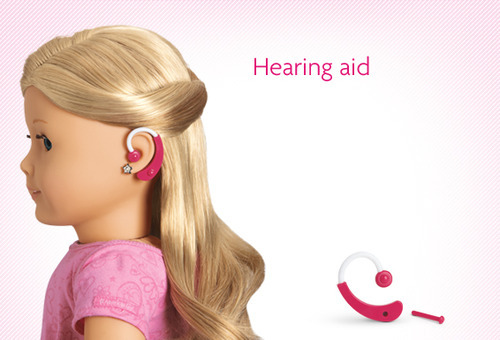
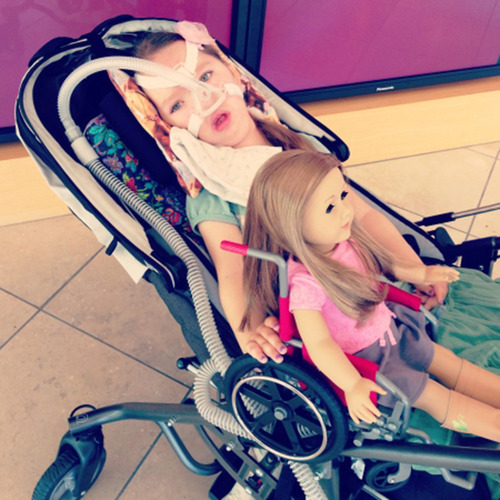
and they’ve also released accessories like doll-sized wheelchairs, hearing aids, and crutches so that girls who aren’t able-bodied or are hard of hearing can have a little friend who shares their experiences
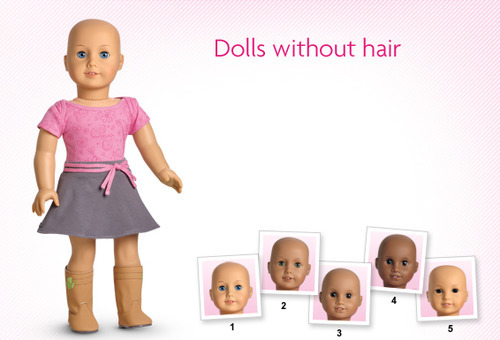
and they’ve even begun to offer dolls without hair for little girls who have alopecia or have lost hair while battling cancer
and basically if you don’t think that’s the tightest shit then get out of my face
Also: SERVICE DOGS.
IT’S SO CUTE IT EVEN HAS TRAINING TREATS. You go American Girl.
They also consulted the Nez Pierce when making their Kaya doll and that’s why her smile doesn’t show teeth, among other things, and they’ve released some beautiful, and accurate, modern Powwow regalia for her.
Also they’ve been offering all this stuff since I was still getting the catalog. I just turned 29, so if I’m going to guess, that means they’ve been offering these options since at least 1996ish.







 DarkestElemental616