A haunted doll mistaking a creepy android to be a bigger, stronger, haunted doll, and the creepy android mistaking the haunted doll as a smaller, sassier android.
Android: [gets hit with rain water and short circuits] Haunted Doll: H̷O̷L̴Y̷ ̶W̵A̷T̸E̷R̶ ̵W̴A̵T̴C̵H̴ ̶O̶U̷T̴
Haunted Doll, dying: N̶E̵E̸D̷ ̷S̸O̵U̵L̸S̷ Android: [opens the haunted doll’s back and replaces the batteries] Haunted Doll: A̶C̶C̷E̷P̸T̶A̷B̸L̵E̴ ̷S̴U̴B̸S̵T̸I̷T̷U̴T̵E̴
Android: [transfers their data into a better body] Haunted Doll: A̸ ̵F̴L̸A̷W̵L̷E̴S̵S̷ ̷B̶O̸D̶Y̵ ̷P̶O̵S̶S̵E̷S̶S̵I̷O̷N̴
I would love to see this movie or story. A creepy looking android that gained sentience and on the run decides to adopt this weird tiny abandoned android which is a haunted doll. They have some cute adventures where the android is all protective and caring to their new friend in their own way and the doll is trying to teach this giant doll how to use his ghost powers in that body and murdering people who pose a threat to them. Maybe complaining about how technologically advanced has changed the world so much and how they feel lost in it despite being here for so long. At best the android thinks the doll is talking about becoming obsolite, and at worst (but funnier) they think the doll is saying how they are literally lost and tells them they have gps so they can take them to where they want to go and the doll is just like this dumb new haunted doll…I gotta protect and nurture it before it dies from it’s naivette. Meanwhile an excorsist and some retrieval squad are tracking them down and they argue about what they’re going up against. Most of the retrieval squad don’t believe in the supernatural and thinks they found another defective android and the excorsist doesn’t understand technology that great so just assumes he’s dealing with two possessed items.
Exorcist: The power of Christ compels you Android: Error 666 Exorcist, crying: THE POWER OF CH
Creative Writing Professor at a former college: Welcome to creative writing! By the way,
you will not write fantasy, ghost stories, pranormal, or science fiction
in this class, as this is a creative writing course.”
What the ever loving fuck is with “creative” writing professors who think that speculative fiction of any stripe ISN’T CREATIVE?
I still remember my own creative writing teacher telling me this because he saw the Terry Pratchett book on my desk and got this smug smirk on his face like “aha, gotcha”. He had the nerve to pick it up and call it “popularist fiction”, like somehow being popular and easily accessible made it less inherent in intellectual value.
I had it in my back pack because I did my final thesis on the evolution of mythology and folk tails into fantasy and sci-fi and the societal importance of telling stories (before anyone asks, no I don’t have it, I lost it when I moved continents), and I used Terry Pratchett because there wasn’t a single humanitarian issue the man did not touch on.
Which I told him. And then he kind of floundered and went “ah, well but, it’s…well I mean it’s not exactly high brow”, like neither the fuck was Shakespeare or Dickens you self-important turnip. Dickens was literally selling his stories by the chapter. He was the popular author of his time. Shakespeare was too, he fucking made up words and phrases all the time because the language he needed to express himself didn’t exist in the way he needed it too.
Intellectual elitism is nothing more than a hold over from class warfare and the belief that only certain people should get to be truly educated. And it needs to be smashed.
It has come to my attention as of late that people do not fully understand the difference in the punks. Some people seem to think that Steampunk is pretty much everything when you see it.
Let us review the fundamentals. Steampunk is set in an alternate future where steam was the primary technology and they continued on that path till now. That’s basically it. However there are MANY alternate futures with alternate technology’s, and lumping all of them into steampunk is just cheapening them. So let me just show you an example of each.
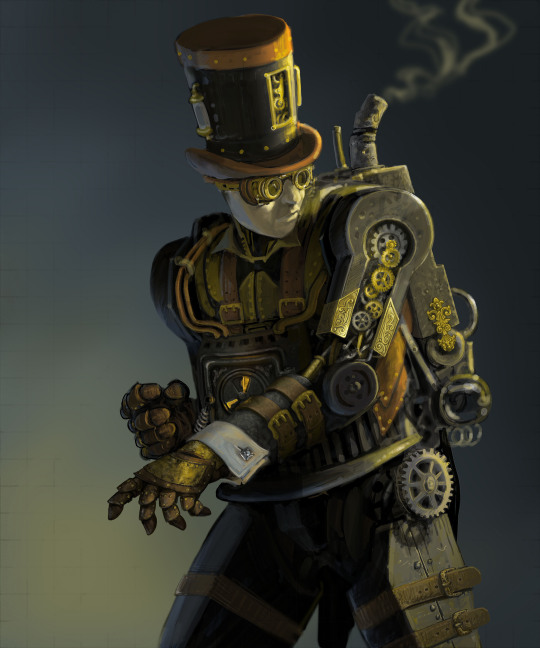
CLOCK/STEAMPUNK: This era is often Victorian in style for some reason and the steam powered robots often use lots of smoke stacks, gears, clockwork, belts and goggles.
TESLAPUNK: Unlike steampunk, this world functions as if Nikola Tesla had revolutionized the world with his electricity. Lots of lightning rods, Tesla rods and power cables. Often this is confused as steampunk because they often have the a similar look.
DIESELPUNK: This universe takes place in a world where diesel engines and machines using oil are everywhere. This is criminally underused. They usually use a more art deco and WW1/2 style.
ATOMIC/RAYPUNK: This one uses atomic technology. Lasers, blasters, radiation, green glows, aliens and giant robots. Also rarely used but I dare you to watch “The Iron Giant” and tell me you don’t love it.
CYBERPUNK: Possibly more well known than steampunk. A future, in which technology is so advanced people are more technologically advanced than some of the robots. Chainsaw arms, robotic eyes, hooking your brain up to the internet and evil corporations.
BIOPUNK: Imagine a future where technology has advanced so much that we construct living organisms as easily as building a robots. Living machines, weapons, organic clothing and new and improved limbs.
JUNKPUNK: Almost as unknown as candlepunk but still one to remember. This world all technology is composed of random parts you might find in a junkyard. Kind of like the ‘Coolest’ cooler.
SOLARPUNK: This one has been getting some recent attention. However in a world where technology is powered by the sun I have yet to find one robot picture so sorry about this one.
PUNKPUNK: You have gone off the far side of the spectrum. Turn back.
Hopefully now you can tell the different alternate futures apart and can better survive in the world with this Essential information.
(Note this is not my artwork just a quick google search, but I am working on a series that will clarify these examples better with my own work.)
Yo, just saying, but Cyberpunk ISN’T just an aesthetic.
Cyberpunk is a genre about contrast between high technologies and low life, and as such they focus on sadder/violent parts of people’s lives, like crime, law enforcement (treated realistically and not like in cop dramas), cybercrime, drug dealing, terrorism or warfare.
Common themes include any variation on a concept of identity (from identity theft, through search for identity, to identity politics), loneliness in digital age, anti-capitalism focusing on unchecked power of corporations, anti-fascism focusing on technological surveillance state, ethics of artificial intelligence and other technologies.
Best known examples are probably Robocop, Ghost in the Shell, Matrix (especially the first movie, sequels are more like post-apo war stories), Neuromancer, Snow Crash, Deus Ex, Shadowrun, System Shock.
Steampunk was an offshoot of cyberpunk, but since stopped being a genre and became only an aesthetic.
Biopunk is offshoot of cyberpunk, and usually contains similar themes (just with genetic engineering). Other offshoots include nanopunk (with nanotechnology) and, which has recently been getting more attention, nowpunk – stories that use concepts and themes of cyberpunk, but are set in contemporary times – we’re talking stuff like Mr Robot tv show, or Watch_Dogs video games.
Honestly, a lot of the punk settings and ideas are in some way political, or at least VERY good at exploring issues relevant to the time period they pull inspiration from.
Steampunk for imperialism, biopunk for ethical issues of biotechnology, atompunk for the red scare and cold war, etc. etc.
Not saying every story with these looks NEEDS to deal with those specific issues, but each punk type opens itself up to discussing those types of issues much more easily.
Also, each punk doesn’t need to exist separate from each other. I have a setting that is bio, solar, and junkpunk all at once.
These genres and aesthetics are tools, and the rules about ‘em aren’t hard and fast to say the least.
The “punk” part of all of these is a political analysis and a rebellion.
Steampunk without addressing the imperialism and class privilege of the Victorian era is “gaslamp fantasy” or “alternative history sci-fi”, depending on how sci-magical it goes.
Cyberpunk without the dystopia of a world ruled by megacorporations, and the small rebellions people engage in just to survive, is just gritty sci-fi.
Dieselpunk that doesn’t analyze how the imperialism of the late 19th century evolved into the rise of fascism in the early 20th is just more alternative history sci-fi.
Teslapunk have some similar imperialism themes to steampunk plus some of the anti-corporate vibe of cyberpunk. It’s an analysis of thing like “what would the world be like if an autistic dreamer like Tesla hadn’t been ground into the dirt by the corporate greed of Edison and others?” or “what if Edison and the other corporatists had stolen EVEN MORE of Tesla’s work?”
Solarpunk seeks to build clean energy, green spaces, and sustainable industries in response to the real threat of climate change.
The “punk” part is important. It gives us tools to dismantle injustice in the real world by analyzing or overcoming the injustice in a fictional one.
dwarfs evolved in deep subterranean societies, and it shows. their eyesight is shit; their skin is intensely sensitive to the sun. the first human diplomats to come in contact with them mistakenly labeled the dwarfs a war-like people because they were so seldom seen without layers of protective clothing; it was a while before anyone realized that dwarven skin just burns easily and needs to be kept safe under layers.
due to their tendency to stay covered up when aboveground, it was longer much longer before anyone found out that dwarfs also glow.
they’ve since developed much fancier ways of keeping track of each other down in the tunnels, of course, but there’s this fun little holdover, stripes of faint blue or green (think of the way veins look on pale humans) swirling over their entire bodies, each dwarf boasting a pattern that’s entirely unique.
topside they look like nothing more than interesting or possibly puzzling tattoos – why did you need that stripe crossing right over your eye like that? – but get them down in a cavern, let them shed their protective suits, and marvel. they live and work down in the deepest levels, where humans can’t see their own hands in front of themselves but can sure as hell see the familiar lines of their dwarf buddies, shining to show them the way.
or, okay, if we do want to get into fighty dwarfs
nighttime is fine; as soon as the sun goes down they’re free to remove their heavy protective suits (dwarfs going sleeveless to let their skin glow)
and, thus unencumbered, surround their enemies’ little campsite
and the last thing anyone sees before everything goes to hell are ghostly blue and green swirls floating through the night
jesus crust makenzie this is horrifying and i love it
Okay, this is in incredibly petty nitpick, but: if you’re writing a fantasy setting with same-sex marriage, a same-sex noble or royal couple typically would not have titles of the same rank – e.g., a prince and a prince, or two queens.
It depends on which system of ranking you use, of course (there are several), but in most systems there’s actually a rule covering this scenario: in the event that a consort’s courtesy title being of the same rank as their spouse’s would potentially create confusion over who holds the title by right and who by courtesy, the consort instead receives the next-highest title on the ladder.
So the husband of a prince would be a duke; the wife of a queen, a princess; and so forth.
(You actually see this rule in practice in the United Kingdom, albeit not in the context of a same-sex marriage; the Queen’s husband is styled a prince because if he were a king, folks might get confused about which of them was the reigning monarch.)
The only common situation where you’d expect to see, for example, two queens in the same marriage is if the reigning monarchs of two different realms married each other – and even then, you’d more likely end up with a complicated arrangement where each party is technically a princess of the other’s realm in addition to being queen of her own.
You’ve gotta keep it nice and unambiguous who’s actually in charge!
Okay, I’ve received a whole lot of asks about this post, so I’m going to cover all of the responses in one go:
1. The system described above is, admittedly, merely one of the most common. Other historically popular alternatives include:
The consort’s courtesy title is of the same rank as their spouse’s, with “-consort” appended to it: prince and prince-consort, queen and queen-consort, etc. This is how, e.g., present-day Monaco does it.
The consort is simply styled Lord or Lady So-and-so, and receives no specific title. I can’t think of any country that still does it this way, off the top of my head, but historically it was a thing.
(Naturally, your setting needn’t adhere to any of these, but it would be highly irregular for it to lack some mechanism for clarifying the chain of command.)
2. The reason why the consort of a prince is historically a princess even though those titles are the same rank is basically sexism. This can go a couple of ways:
In many realms, there was no such thing as being a princess by right; the daughter of a monarch would be styled Lady So-and-so and receive no specific title, so the only way to be a princess was to marry a prince.
In realms where women could hold titles by right, typically a masculine title was informally presumed to outrank its feminine counterpart. So, e.g., kings outrank queens, princes outrank princesses, etc.
In either case, no ambiguity exists.
(Interestingly, this suggests that in a more egalitarian setting where masculine titles are not presumed to outrank their feminine counterparts, or vice versa, you’d need to explicitly disambiguate rankings even outside the context of same-sex marriages. Food for thought!)
3. It would also be possible to have two kings or two queens in the same marriage without multiple realms being involved in the case of a true co-monarchy. However, true co-monarchies are highly irregular and, from a political standpoint, immensely complicated affairs. If you’re planning on writing one of those, be prepared to do your research!
4. The next rank down from “countess” is either “viscountess” or “baroness”, depending on which peerage system you’re using.
(Yes, that last one actually came up multiple times. Apparently there are a lot of stories about gay countesses out there!)
Blurb: Jewish literary tradition has always been rich in the supernatural and the fantastic. In this book, gathered from the best short fiction of the last ten years, twenty authors prove that their heritage is alive and well — in the spaces between stars that an alphabet can bridge, folklore come to life and histories become stories, and all the places where old worlds and new collide and change.
The average of all the ratings I gave all these stories is 3.75 stars, so I’m very happy with this collection! I’ve had bad experiences with anthologies of multiple authors before, but this one was really good.
Being a Jew who loves fantasy, it’s awesome to have a book full of fantasy that centers Jewish characters (well… mostly? There was one story where I couldn’t find any connection to Judaism and I don’t know what was up with that. Neil Gaiman explain yourself).
My favorite stories:
Geddarien by Rose Lemberg, a devastating and beautiful story about a Jewish musician in a ghetto during the Holocaust who plays music for a dancing city.
The Dybbuk in Love by Sonya Taafe, a gorgeously-written tale about exactly what the title says.
Uncle Chaim and Aunt Rifke and the Angel by Peter S. Beage, in which a grumpy Jewish painter is unimpressed by the literal actual angel who appears in his studio.
Semaphore by Alex Irvine, about a boy struggling to come to terms with his brother’s death by absorbing words and etymology.
And those are just the ones I rated five stars. I absolutely recommend this book.
city monsters tend to be harder to find, and for good reason. city ppl are so used to weird shit happening on the daily, that sometimes monsters dont really have to come up w/ an elaborate excuse for existing. they hide in plain sight.
like lamp posts? you think those are government-issued street lights? get real.
Darren is your average half-human, half-fae trans teenager, busy figuring out his powers and puberty while trying to survive finals. When Vlad, a newly turned vampire, moves in with the witch down the street, he and Darren get off on the wrong foot. Darren is always one to give somebody a second chance, though, and as they become friends, he realizes Vlad is just lonely and struggling with his new powers. That’s something Darren can definitely relate to, and he’s happy to lend his support. But while he coaxes Vlad out of his shell, Darren ends up learning about Vlad’s past… and the danger Vlad is in. Darren only wants to help—help Vlad feel comfortable in his own skin and help him feel safe.
Petition to sit down all the people who make coma theories about Adventure Time and tell them “listen, this fucking show is about the last human living in a post-apocalyptic world where deadly magic has been reawakened following a global thermonuclear war that wiped out the rest of the human species, how much fucking darker do you want it to be”
Even though I thought my first Creative Writing professor was kind of a douche, he made a good point about this. One of our first assignments was to write in this eerie, otherworldly style (we were mimicking a specific author whose name escapes me), so we had to write about eerie otherworldly things happening. It’s no exaggeration to say that more than half the class had a “big reveal” where we find out that the story’s strange events and themes are all in the mind of some person in an insane asylum, or someone having a drug trip.
My professor said something like, “you just successfully wrote a world that feels separate from our own, but got frightened last minute and shoe-horned in normalcy. You showed that you were afraid to commit to something different and interesting.” Though I’m typically a contrarian and a piece of garbage, I am inclined to agree with my professor. I feel like people who write coma theories and the like are afraid to accept that the world of the story is separate from our own. They like everything wrapped up in this crazy little realism box where nothing out of the ordinary happens in fiction.
you win the Best Addition to a Post prize
Thank you 🙂
This pretty well hits the nail on the head as to why I generally hate coma/dream theories and people who think they’re so fucking deep for coming up with it. In my book it’s LAZY, plain and simple.
I think the only times I can think of where “It was all a dream” really works are in pieces like Over the Garden Wall, Ink, Coraline, and Mirrormask. In all of those, the characters ‘wake up’ again in their ‘normal’ world, but there’s a very strong implication that the dream world is as real, if not more so, than the ‘real’ world, and the things they did in the dream world had a very direct impact on the waking world– not in an “I’m gonna be a better person” sense, but literally who lives and who dies at the end of the story.
Notably, in most of those, it’s stated flat-out within the first couple of minutes that the character in question is dreaming. It’s not a big reveal, it’s a fundamental detail of the setting.
If you’re gonna do a dreamworld, actually commit to doing a dreamworld.
Whatever it is you do, ACTUALLY COMMIT TO IT.
Another problem with coma theories in stories that aren’t specifically about a dreamworld is that it completely nullifies any character growth or change or hardship. None of it matters anymore, which is a betrayal of the audience’s investment in the world and characters. That’s why it feels lazy and unsatisfying- it makes all other plot threads and elements unnecessary.
@ubercream was it Ray Bradbury? Because that sounds like Ray Bradbury.





 DarkestElemental616