Every single Native culture is distinct and unique, though many share similarities, and lumping them together is ridiculous. And while some practices are pan-Indian, the vast majority are not.
Stop homogenizing our cultures. Every Native culture is beautiful and unique and deserves to be treated that way.
Don’t fall into the trope of “pan Indian”. Fucking teepees and totem poles never existed together. Totem poles are permanent structures, teepees are fucking tents for nomadic peoples. First Nations and indigenous cultures are all deep and uniquely complex, it would be like confusing England with Russia.
If Congress does not pass legislation protecting the tribe and the legal challenge fails, the Mashpee would be stripped of their right to exercise sovereign jurisdiction over their land.
Jessie Little Doe Baird, the tribe’s vice-chairwoman, told Al Jazeera that loss of jurisdiction would prevent the tribe from running indigenous language schools, tribal courts, and housing projects, as well as its own police.
“We have our own police force, which is important because they’re tribal citizens and since we’ve had our own police force, none of our men have been beaten or shot, which we’ve had before with non-tribal police,” she said.
Indigenous women experience exponentially higher rates of violence, which often goes unaccounted for. The MMIW Database seeks to fill these gaps in data by logging cases of missing and murdered indigenous women, girls, and two spirit people. Help us do this work by supporting our records request campaign–you can make a difference with as little as $3! All donations will be used to cover the costs of records requests to law enforcement and government agencies for MMIW case data–we pay MuckRock $3 per request for their services in helping us to file these requests (it’s a mess, and their help really streamlines the process!), and in addition to that, sometimes agencies will ask us to pay for the time and labor it takes for them to pull and scan these records. Your donation will go straight to MuckRock, to help cover these costs. If we reach our goal of $1500, that will pay for over 400 new records requests! We are submitting requests to tribal, city, county, state, and federal law enforcement, as well as correctional facilities (for deaths in custody), so we have a long way to go, but we can get there with your help.
For more information on the MMIW Database, please see mmiwdatabase.com, or contact us at mmiwdatabase@gmail.com.
“I never learned my Navajo language and I was never inspired to learn it. As I got older, I realized how valuable our language is to the livelihood of our Navajo Nation. ” -Dr. Shawna L. Begay
Our Navajo or Diné language is in danger of becoming extinct. Help us create and develop the first Navajo-English educational media TV puppet show, “Diné Bí Ná’álkid Time” which means ‘The Navajo Movie Time.’ It will inspire and teach our youth basic language skills using media as a technology tool. Parents, grandparents, children and grandkids can learn to speak Navajo fluently together within their own homes.
Long-time friends and educators, Dr. Shawna L. Begay and Charmaine Jackson have teamed up to create this new TV pilot for an all-ages audience or for anyone who wants to learn the Navajo language.
With your support, it’ll be the first educational Navajo and English puppet show that will teach and preserve the Navajo language and culture through digital media.
After several years of extensive research on the Navajo Nation, Dr. Begay recently completed her PhD from the University of Nevada-Las Vegas with her doctorate thesis, ‘Developing A Navajo Media Guide: A Community Perspective.’ As project director, she quickly realized she was a pioneer on the topic.
“When I decided what topic to study I realized there existed very little research in Indigenous educational media, especially with our Navajo people,” stated Dr. Begay. “As Navajo people, we have our own learning objectives and Navajo way of knowing is completely different for Euro-Western schooling. I decided that I had to research and develop our own curriculum guide that is meant to teach Navajo through media.”
Dr. Begay and Jackson, co-writers of the show, developed the first 3-puppet characters and plan for many more. The pilot features Nanabah-a young Navajo girl, Gáh (Rabbit) and Dlǫ̀ǫ̀ (Prairie Dog) who will go on endless adventures learning about language, gardening, the environment and the importance of family values. Nanabah is fluent in Navajo and likes to teach children about life on the reservation with her animal friends and special guests. Children who want to learn Navajo will also be an important part of the show by interacting with Nanabah, her friends and storyline.
Dr. Begay’s research concluded there exists very little research in the area of Indigenous educational media. Currently media is a very powerful tool that can be used to teach. She is cognizant of the digital age we live in and the opportunities to utilize media to revitalize the Navajo language.
“Star Wars and Finding Nemo,” dubbed in Navajo, was a great place to start and it has garnered national exposure of our language. However, we need a show based on our own Navajo learning principals our ancestors set out for us to learn and live by. I don’t think a non-Navajo, non-Native or non-Indigenous person can do that for us, nor should they. We, as Navajo, need to produce this show ourselves, if we are to be truly sovereign,” added Dr. Begay.
Both educators, Dr. Begay and Jackson, of Naalkid Productions have been talking about this educational language project for about the past four years and still have a long way to go to finance their dream.
“With the support of Navajo TV Anchor Colton Shone, our team of Navajo artists, filmmakers, family and friends, this video pilot is a huge step forward,” said Jackson. “Our journey has just begun and the big next step is finding financial support to create a whole new puppet TV series.”
We aim to raise $50,000 with this project which will allow us to continue with pre-production and production aspects of making this digital media project become a reality. We need your help to save our language by teaching Navajo to our future generations.
Pre-Production: -Script writing for the pilot show -Puppet Development/Creation -Casting for puppeteers and other talent that will be on screen -Hiring of all key cast and crew
Production: -Locations and permits -Rental of Studio space -Equipment: cameras, sound, lights, etc. -Cast and Crew budget
Despite all the notes on this post, they’re still at $13,155 of their $50,000 goal.
Please keeping sharing and donate if you can!
what it sits at as of 07/27/18
GoFundMe as of 09/01/2018 Currently: $35,912 of $50,000 goal
name one native american intellectual off the top of your head, name one native american actor or actress off the top of your head, name one native american senator, one native american news anchor, or an author or a tv personality or a singer or a poet or a comedian, name a single native american teacher you’ve had, can you? probably not
ok so now think of one native american cartoon character you know of or a sports team relating to native americans whether it’s their actual name or their team logo, or a town you live in or near with a “native” name bet a lot of these things came to you right away i bet you didn’t even have to think
needing native representation in media, education and government are not decoy issues, the commercialization and appropriation of native cultures are not decoy issues, the lack of native representation is institutional oppression at work
White people specifically need to reblog this, I don’t CARE if it makes you uncomfortable–that’s the point. Listen to Native voices about Native issues PLEASE
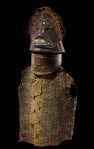
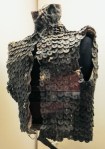
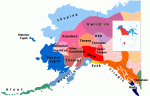
The Tlingit are a native people who inhabit the southeastern coast of Alaska and Canada in the Pacific Northwest. An ingenious an resourceful people, the Tlingit were expert weapon and armor makers crafting wooden helmets and suits of armor made from animal skins woven with wooden slats. Originally the Tlingit had relatively advanced metallurgical skills, working tools in copper and rudimentary iron working. After European contact they quickly learned more advanced metallurgical skills such as advanced iron working and steel-making. Along with the neighboring Haida, the Tlingit were noted for crafting high quality iron and steel daggers. They even made swords in excess of 20 inches in blade length, being one of the few Native American cultures with a sword making tradition.
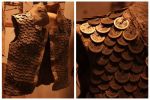
In the 18th century the Russians set up the Pacific Maritime Trade, a trading network in which Russian merchants would acquire furs from the Pacific Northwest and trade them for goods in China, which in turn could be traded in Europe and elsewhere. The Tlingit became active participants in this commercial enterprise, trading furs with the Russians for Chinese goods such as porcelain, silk, and tea. One item that particularly piqued their interest were Chinese coins. Made of bronze the coins typically had a hole in them so that they could be carried on a string that was attached to a sash or belt, since purses and moneybags were never popular in Chinese fashion. For the Chinese and Russians the coins were a form of currency, but for the Tlingit the coins had a entirely different purpose altogether. The Tlingit began sewing the coins onto animal hide vests crafting intricate suits of scale armor. The armor offered excellent protection against arrows, blades, and blunt weapons, and may have offered some modest protection against early firearms. Often these suits of armor were imbued with special mystical and magical properties, giving Tlingit warriors a psychological edge in combat.
In the 19th century British traders began to take up the trade, and finally Americans became dominant in the Pacific fur trade after Russia sold Alaska to the United States in 1867. Armor crafting from Chinese coins continued well into the late 19th century, being further bolstered by Chinese immigration to the west coast in the mid 1800s with the California gold rush. Today the Tlingit still produce beautiful knives, swords, and suits of armor, keeping alive a tradition which their forefathers had done before them.





 DarkestElemental616