fuckyeahfluiddynamics:

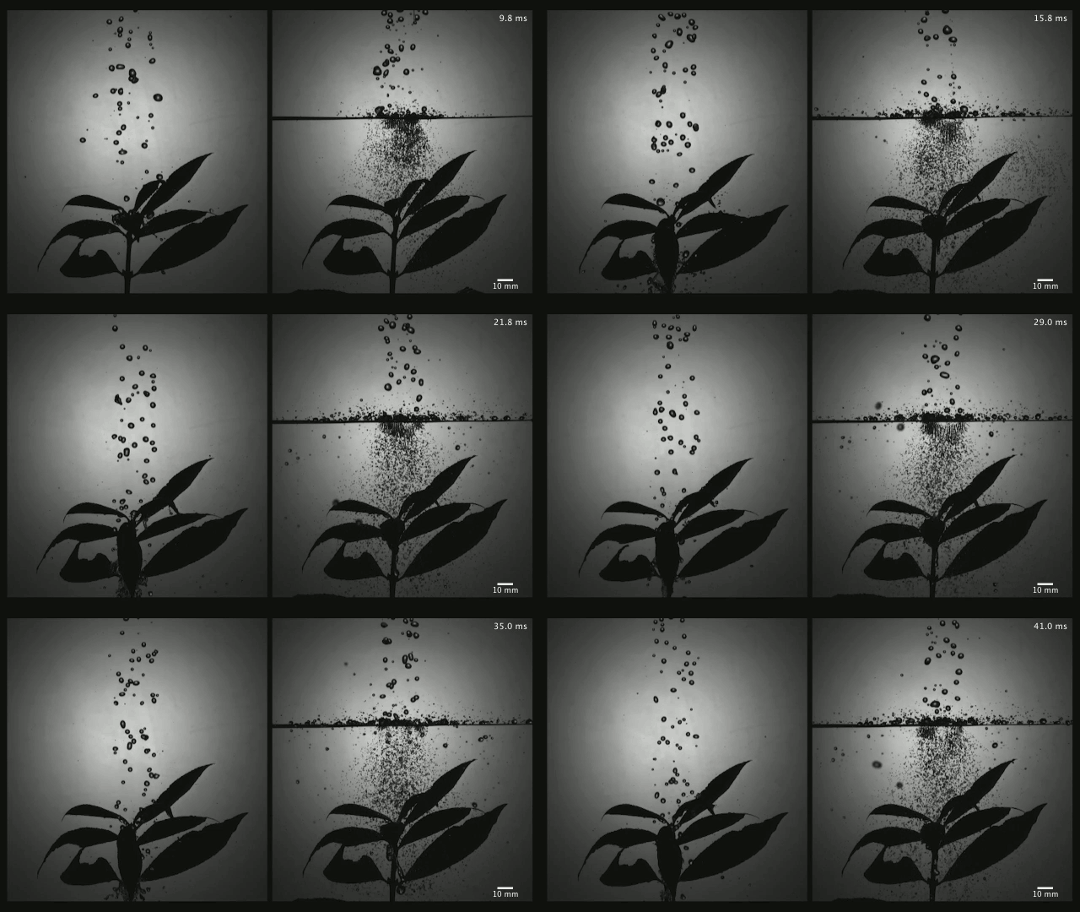
Lots of applications – from rocket engines to ink jet printing – require breaking large droplets into smaller ones, so there are many methods to do this. Some techniques rely on fluid instabilities, others use ultrasonic vibration. But one of the most effective methods may also be the simplest: placing a mesh between large drops and their target.

That’s the idea at the heart of this new study, which uses a wire mesh to break large droplets into a spray of finer ones 1000 times smaller. The target application is agricultural spraying, and the researchers argue that their method would allow farmers to treat their crops effectively with fewer chemicals and less run-off. Drops impacting the mesh form a narrow cone over the plant, and the smaller, slower droplets are better at sticking to the plant instead of bouncing away. They’re also less likely to injure crops, since they don’t disturb the leaves the way larger drops do. (Image and research credit: D. Soto et al.; via MIT News; submitted by Omar M.)
//www.instagram.com/embed.js

memewhore:

mister-abstract:

physticuffs:

georgeglassismybf:

gif87a-com:

Reversibility of fluid motion in glycerin

Hi this fucked me up

my thesis involves this principle! in fluids, viscosity (the thickness/stickiness of the fluid) and inertia (the tendency of something to stay in motion when a force is exerted) are in competition. glycerin is incredibly viscous, so the viscosity beats the inertia and the dye doesn’t shift beyond where it is immediately pushed–so exerting an equal and opposite force on the dye just puts it back to its exactly original position.

wut

It don’t mix, it just stretch.

fuckyeahfluiddynamics:

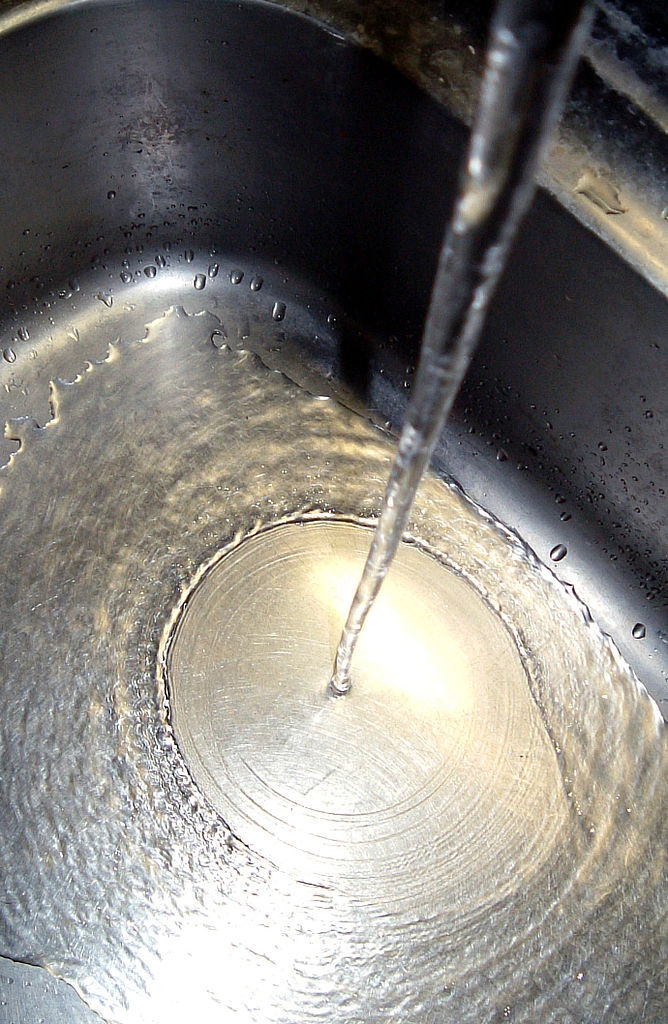
You’ve seen it a million times. When you turn on your kitchen faucet, the falling water forms a distinctive ring – known as a hydraulic jump – in the bottom of your sink. First described by Leonardo da Vinci, this phenomenon has been studied for centuries, and, for nearly all of that time, scientists assumed that gravity played a major role, even in kitchen-sink-sized hydraulic jumps. But that’s not the case.

A newly published study shows that gravity can’t be a major player in setting the radius of these small-scale hydraulic jumps because they form the same whether the jet impinges from above, below, or sideways. Instead, the researchers found that surface tension and viscosity are the parameters that determine the jump’s formation. It’s not every day that you get to overturn a centuries-old theory in physics! (Image credit: J. Kilfiger; research credit: R. Bhagat et al.; via Silicon Republic; submitted by Patrick D.)