we really need a medical show set in ancient greece or rome like can you imagine
whenever the doctors are on clinic duty they get mad bc patients come in like “i haven’t been feeling well, i think somebody cursed me on apollo’s name” and the doctors always have to be like “you have malaria”
constant snake escapes in the hospital’s shrine to asclepius
everyone’s least favorite job is leech duty
doctor’s writing prescriptions for things like gladiator blood and crocodile poo
you know how the running joke about house md is that everyone wanted every diagnosis to be lupus and it was never lupus? that but with the wandering womb
IMPERIAL PHYSICIAN GREGORIVS DOMVS takes the cases no other doctor can solve…
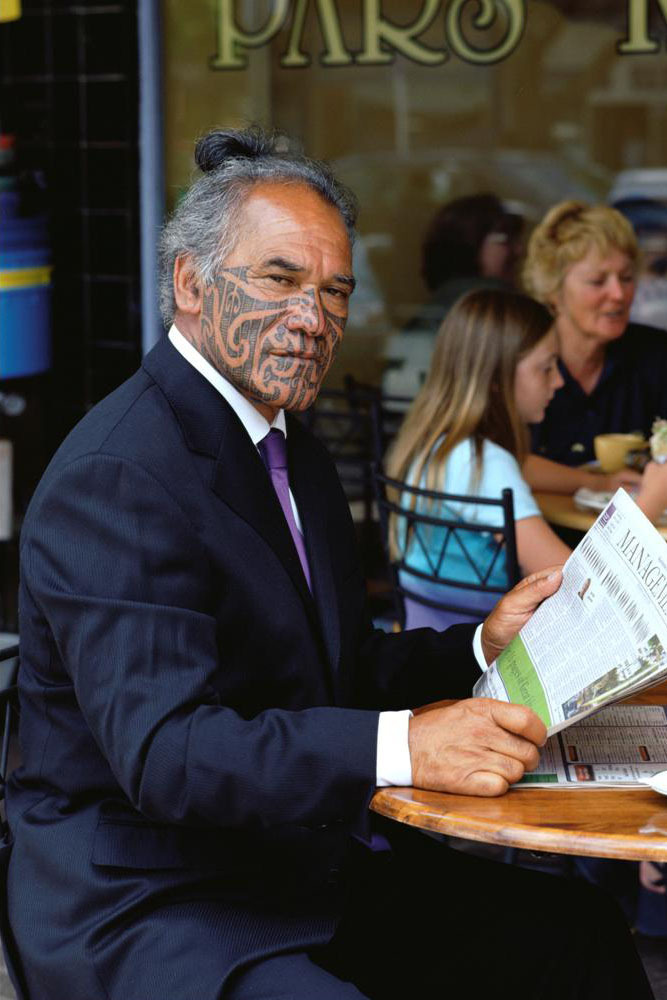
The native Maori people of New Zealand have tattooed their faces for centuries. They had a complex warrior culture before the arrival of Europeans, and suffered under early colonialism, but have experienced a cultural revival since the 60′s.
The marks are called moko, and are etched with chisels instead of needles to leave grooves along with the ink. The true form is sacred, unique to each person, and distinct from European tattoos that mimic that traditional style.
There arent many pictures non combat related that look this badass
Actually most
Tā moko are done with modern tattoo equipment these days, but some people get them done the traditional way. And, as others have said, they’re not for Non-
Māori, as they have specific meanings and significance. If you want a tattoo with Māori
style, you can get a
kirituhi. These avoid any designs associated with particular tribes or famous people you’re not related to.
Kirituhi is a Māori style tattoo either made by a non-Māori tattooer, or made for a non-Māori wearer. Kirituhi has mana of it’s own and is a design telling the unique story of the wearer in the visual language of Māori art and design. Kiri means ‘skin’, and tuhi means ‘to write, draw, record, adorn or decorate with painting’.
Kirituhi is not restricted to only Māori people, and it is a way for Māori to share our cultural arts with people from around the world in a respectful manner, and for non-Māori artists to enjoy our beautiful art form as well. I happily do kirituhi for my clients around the world and it is a privilege to do such work for them.
Kirituhi is no lesser an artform than moko, however it is different and I believe these differences must be acknowledged and respected, so that the integrity of our taonga Māori – moko, is maintained around the world.
Moko is uniquely Māori and it is strictly reserved to be done by Māori, for Māori.
If either the recipient or tattooer do not have Māori whakapapa, then the resulting design is a Māori Style tattoo or kirituhi, NOT moko. The word moko originated from the Māori atua (god) of volcanic activity and earthquakes, Rūaumoko – therefore the origin of tā moko is divine and sacred – to me this is no small thing, nor should it be dismissed.
As my mentor once told me, ‘moko is about 99% culture, and 1% tattoo’.
is “chai” a TYPE of tea??! bc in Hindi/Urdu, the word chai just means tea
its like spicy cinnamon tea instead of bland gross black tea
I think the chai that me and all other Muslims that I know drink is just black tea
i mean i always thought chai was just another word for tea?? in russian chai is tea
why don’t white people just say tea
do they mean it’s that spicy cinnamon tea
why don’t they just call it “spicy cinnamon tea”
the spicy cinnamon one is actually masala chai specifically so like
there’s literally no reason to just say chai or chai
They don’t know better. To them “chai tea” IS that specific kind of like, creamy cinnamony tea. They think “chai” is an adjective describing “tea”.
What English sometimes does when it encounters words in other languages that it already has a word for is to use that word to refer to a specific type of that thing. It’s like distinguishing between what English speakers consider the prototype of the word in English from what we consider non-prototypical.
(Sidenote: prototype theory means that people think of the most prototypical instances of a thing before they think of weirder types. For example: list four kinds of birds to yourself right now. You probably started with local songbirds, which for me is robins, blue birds, cardinals, starlings. If I had you list three more, you might say pigeons or eagles or falcons. It would probably take you a while to get to penguins and emus and ducks, even though those are all birds too. A duck or a penguin, however, is not a prototypical bird.)
“Chai” means tea in Hindi-Urdu, but “chai tea” in English means “tea prepared like masala chai” because it’s useful to have a word to distinguish “the kind of tea we make here” from “the kind of tea they make somewhere else”.
“Naan” may mean bread, but “naan bread” means specifically “bread prepared like this” because it’s useful to have a word to distinguish between “bread made how we make it” and “bread how other people make it”.
We also sometimes say “liege lord” when talking about feudal homage, even though “liege” is just “lord” in French, or “flower blossom” to describe the part of the flower that opens, even though when “flower” was borrowed from French it meant the same thing as blossom.
We also do this with place names: “brea” means tar in Spanish, but when we came across a place where Spanish-speakers were like “there’s tar here”, we took that and said “Okay, here’s the La Brea tar pits”.
Or “Sahara”. Sahara already meant “giant desert,” but we call it the Sahara desert to distinguish it from other giant deserts, like the Gobi desert (Gobi also means desert btw).
Languages tend to use a lot of repetition to make sure that things are clear. English says “John walks”, and the -s on walks means “one person is doing this” even though we know “John” is one person. Spanish puts tense markers on every instance of a verb in a sentence, even when it’s abundantly clear that they all have the same tense (”ayer [yo] caminé por el parque y jugué tenis” even though “ayer” means yesterday and “yo” means I and the -é means “I in the past”). English apparently also likes to use semantic repetition, so that people know that “chai” is a type of tea and “naan” is a type of bread and “Sahara” is a desert. (I could also totally see someone labeling something, for instance, pan dulce sweetbread, even though “pan dulce” means “sweet bread”.)
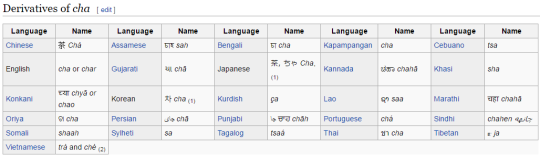
Also, specifically with the chai/tea thing, many languages either use the Malay root and end up with a word that sounds like “tea” (like té in Spanish), or they use the Mandarin root and end up with a word that sounds like “chai” (like cha in Portuguese).
So, can we all stop making fun of this now?
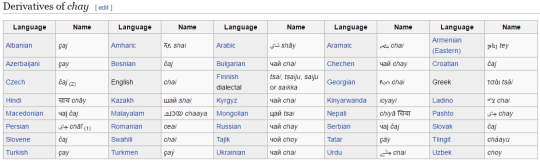
Okay and I’m totally going to jump in here about tea because it’s cool. Ever wonder why some languages call tea “chai” or “cha” and others call it “tea” or “the”?
It literally all depends on which parts of China (or, more specifically, what Chinese) those cultures got their tea from, and who in turn they sold their tea to.
The Portuguese imported tea from the Southern provinces through Macau, so they called tea “cha” because in Cantonese it’s “cha”. The Dutch got tea from Fujian, where Min Chinese was more heavily spoken so it’s “thee” coming from “te”. And because the Dutch sold tea to so much of Europe, that proliferated the “te” pronunciation to France (”the”), English (”tea”) etc, even though the vast majority of Chinese people speak dialects that pronounce it “cha” (by which I mean Mandarin and Cantonese which accounts for a lot of the people who speak Chinese even though they aren’t the only dialects).
And “chai”/”chay” comes from the Persian pronunciation who got it from the Northern Chinese who then brought it all over Central Asia and became chai.
Me, a Hawaiian: “While Hawai’i had a queen we were at the forefront of innovation, technological advancement, and international alliances. All the way up until the “democratic” government of the US illegally arrested her in her own palace and threatened to kill her and massacre her people unless she signed her country over to them. I’d like to have a queen who cares more about her peoples lives than her power again. Also, fuck Trump.”
Reposting cause I can and it’s still relevant
Its worth mentioning that Hawaii is also one of the few countries with a mythic, “Hero King” who they can actually prove existed. King Kamehameha the Great (yes like in Dragon Ball Z), was seven feet tall, the guardian of the war god Kukaʻ ilimoku, and took Hawaii from an archipelago of rival Kingdoms who hadn’t really gotten out of the Bronze Age, unified him under his dominion, and turned the Kingdom of Hawaii into a global trading empire who’s monarchs were greeted at the Court of Queen Victoria.
Guys I’m legit about to cry.
A post I made has over a thousand notes!! And most importantly it’s starting a conversation and spreading knowledge about what was done to my culture.
It is also so heartwarming to go in the notes and find people sharing more information and sources! And even more so to see that only two idiots decided to chime in with their misinformation.
Like, I am damn PROUD of y’all tumblr, we out here learning how to respect each other’s cultures and it’s dooooope!!!!
Triggered by another post I didn’t want to hijack:
Excalibur.
In the legends, Excalibur comes out of a lake (although some versions have Excalibur as the sword in the stone, those are later…the sword Arthur pulls from the stone breaks and he goes to get a better one).
From the “Lady of the Lake.”
Here’s the thing.
In northern Europe in the Iron Age all the way through to the early Medieval period, most iron came from bog iron. It was hard to smelt, because it was a rather low grade ore, but you didn’t have to mine it and it was a renewable resource (in about twenty years you could just come back and get more, because it formed constantly).
Meaning that the iron used to make a sword came…out of water.
In most fairy stories, fairies don’t like iron. So the vision of the Lady as some kind of fairy or elf? Not likely.
The idea of her as a druid? Maybe.
But what’s far more likely is this: The Lady of the Lake was a smith.
But….but…
The Celtic deity in charge of smiths and ironworking was Bridget, a goddess. The mystical associations with the Lady would fit with her being a priestess of Bridget…and thus, a smith.
IOW, Arthurian people, maybe we should not be visualizing the Lady of the Lake as a slender, graceful woman in a gown…
This had never, ever occurred to me. But after careful consideration: YES PLEASE.
I can’t believe I got to my forties without thinking of it myself!
i like this, but i think it’s more likely that the lady of the lake is an echo of the primarily female water pilgrimmages that happened across the north from the late stone age up to, quite possibly, the 1400′s or so. still water, particularly the black water of bogs and the unlit water of caves, symbolized both death and birth. these women may have been shamans, or they may simply have been spiritually motivated people, but whether they were magicians or not they were very probably midwives and physicians.
so rather than a muscular smith, i visualize a wise but gentle elder who has brought souls into the world and seen them out for many years. the sword she provides comes out of the water of birth and death; that is to say, it has a soul.
related thought: the lady of the lake was said to be ‘clad in white samite’. samite was a silk cloth from the east; people who would have access to it in england were royalty, and those who had traveled as far as the silk road. like, say, a doctor and holy woman who had taken the water pilgrimmage through the caves of eastern europe.
yeah, the more i think about it the more i like my shaman/midwife headcanon.
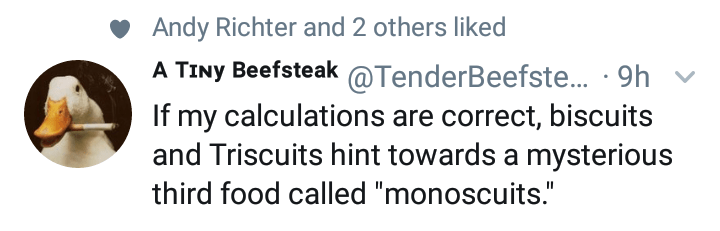
an edible cracker with just one side. mathematically impossible and yet here I am monching on it.
‘scuit’ comes from the french word for ‘bake’, ‘cuire’ as bastardized by adoption by the brittish and a few hundred years
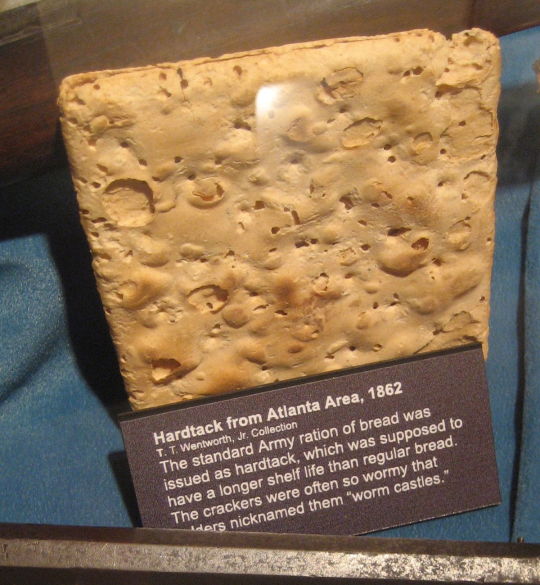
‘biscuit’ meant ‘twice-baked’, originally meaning items like hardtack which were double baked to dry them as a preservative measure long before things like sugar and butter were introduced. if you see a historical doccument use the word ‘biscuit’ do not be fooled to think ‘being a pirate mustve been pretty cool, they ate nothing but cookies’ – they were made of misery to last long enough to be used in museum displays or as paving stones
‘triscuit’ is toasted after the normal biscuit process, thrice baked
thus the monoscuit is a cookie thats soft and chewy because it was only baked once, not twice
behold the monoscuit/scuit
Why is this called a biscuit:
when brittish colonists settled in the americas they no longer had to preserve biscuits for storage or sea voyages so instead baked them once and left them soft, often with buttermilk or whey to convert cheap staples/byproducts into filling items to bulk out the meal to make a small amount of greasy meat feed a whole family. considering hardtack biscuits were typically eaten by dipping them in grease or gravy untill they became soft enough to eat without breaking a tooth this was a pretty short leap of ‘just dont make them rock hard if im not baking for the army’ but didnt drop the name because its been used for centuries and people forgot its french for ‘twice baked’ back in the tudor era, biscuit was just a lump of cooked dough that wasnt leavened bread as far as they cared
thus the buttermilk biscuit and the hardtack biscuit existed at the same time. ‘cookies’ then came to america via german and dutch immigrants as tiny cakes made with butter, sugar/molasses, and eggs before ‘tea biscuits’ as england knew them due to the new availability of cheap sugar- which is why ‘biscuit’ and ‘cookie’ are separate items in america but the same item in the UK
the evolution of the biscuit has forks on its family tree
What I think is really interesting about the papyrus account of the workers building the tomb of Rameses III going on strike to demand better wages is really fascinating to me because if you look at the description given by the royal scribe you see that there was an attempt to satisfy the workers by bringing a large amount of food at once but that was rebuffed by the workers who declared that it wasn’t just that they were hungry at the moment but had serious charges to bring that “something bad had been done in this place of Pharoah” (is poor wages and mistreatment). They understood themselves as having long term economic interests as a -class- and organized together knowing that by doing so they could put forward their demands collectively. It so strongly flies in the face of narratives that are like “in this Time and Place people were happy to be serve because they believed in the God-King and maybe you get some intellectual outliers but certainly no common person questioned that”. If historical sources might paint that sorta picture of cultural homogeneity it is because those sources sought not to describe something true but invent a myth for the stability of a regime.
Since this is getting notes here’s a link to a translation of the papyrus scroll and here’s an article that gets further into the economic situation surrounding the strike and giving an explanation of the events. The workers didnt just refuse to construct Rameses III’s future tomb, they actually occupied the Valley of the Kings and were preventing anyone from entering to perform rituals or funerals. Basically they set up the first ever recorded picket line
Again the workers went on strike, this time taking over and blocking all access to the Valley of the Kings. The significance of this act was that no priests or family members of the deceased were able to enter with food and drink offerings for the dead and this was considered a serious offense to the memory of those who had passed on to the afterlife. When officials appeared with armed guards and threatened to remove the men by force, a striker responded that he would damage the royal tombs before they could move against him and so the two sides were stalemated.
Eventually the tomb workers were able to win the day and acquire their demands and actually set a precedent for organized labor and strikes in Egyptian society that continued for a long time
The jubilee in 1156 BCE was a great success and, as at all festivals, the participants forgot about their daily troubles with dancing and drink. The problem did not go away, however, and the workers continued their strikes and their struggle for fair payment in the following months. At last some sort of resolution seems to have been reached whereby officials were able to make payments to the workers on time but the dynamic of the relationship between temple officials and workers had changed – as had the practical application of the concept of ma’at – and these would never really revert to their former understandings again. Ma’at was the responsibility of the pharaoh to oversee and maintain, not the workers; and yet the men of Deir el-Medina had taken it upon themselves to correct what they saw as a breach in the policies which helped to maintain essential harmony and balance. The common people had been forced to assume the responsibilities of the king.
[…]
The success of the tomb-worker/artisan strikes inspired others to do the same. Just as the official records of the battle with the Sea Peoples never recorded the Egyptian losses in the land battle, neither do they record any mention of the strikes. The record of the strike comes from a papyrus scroll discovered at Deir el-Medina and most probably written by the scribe Amennakht. The precedent of workers walking away from their jobs was set by these events and, although there are no extant official reports of other similar events, workers now understood they had more power than previously thought. Strikes are mentioned in the latter part of the New Kingdom and Late Period and there is no doubt the practice began with the workers at Deir el-Medina in the time of Ramesses III.












 DarkestElemental616