dontwantthenextcommanderiwantyou:

laineylewxlove:

brainstatic:

yellowjuice:

e-wifey:

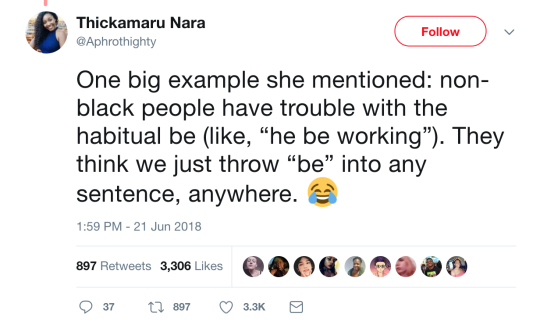
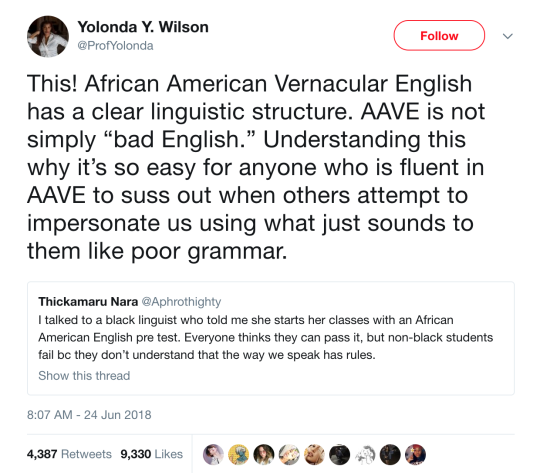
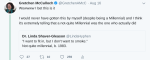
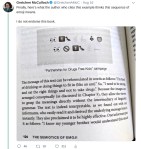
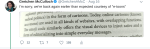
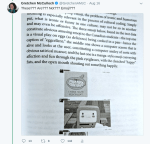
people understand that Spanish speakers speak different dialects of the Spanish language but don’t understand that black people speak a dialect of the English language

saw a variation of this conversation on twitter earlier

I just want to state for the record that this is completely uncontroversial among linguists. It’s the first day of sociolinguistics class.

I majored in Communication Disorders to become an Speech Language Pathologist and am currently and Assisstant. When we were in class we were taught about this as well as other dialect. Under no circumstances do you treat a client for what is considered a dialect. So as a speech therapist when I hear AAVE I move on. It is a real language with real rules.

Thats why it was outrage in the speech community post Katrina when teachers began to recommend students for speech, when it was simply the New Orleans dialect.

“It is a real language with real rules.”

That’s like…literally the first thing my linguistics class covered, too. If it’s spoken naturally, then it’s correct. Just because you’re not familiar with the construction doesn’t make it any less fucking valid.

lordhellebore:

dasakuryo:

latinextra:

no-passaran:

no-passaran:

Sometimes I wonder if native English speakers appreciate how much more comfortable the internet is for them than for the rest of the world

Like, you can go on tumblr and simply read stuff in your mother tongue? Amazing. Go on youtube and you don’t have to replay some sentences ten times to try to understand what they’re saying? Incredible. Look for practically anything on google and know that there will be a fuckton of results that you can read without having to spend half the time looking up words in a dictionary? Fascinating. Make a post or send an ask without panicking that you’ll make a silly mistake or that they won’t understand what you meant? Unbelievable.

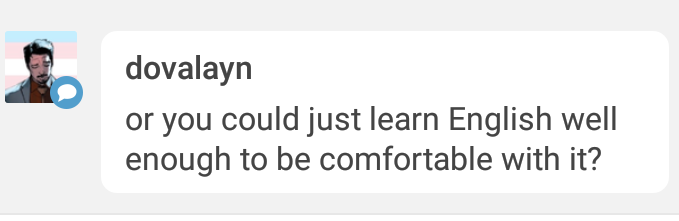
@dovalayn I did. I’ve studied English for about 10 years and I have the official diploma for the C2 level (the maximum for a non-native speaker) given by the University of Cambridge.

But it’s still my 3rd language and there will be always things that escape me, mainly the slang. Always. Because you know you are always less than the majority. And it’s tiring.

That’s all I’m saying. It would be nice for once to not have to make the effort. And effort is something that no matter how many years of English class I take will always be there.

But not everyone can do that. Some people can’t afford private English academies or are bad at languages, and they should still be able to exist online as well. Why are you so bothered by people not speaking English perfectly? Or by people posting on the internet in other languages??

Since you think my English isn’t good enough, I’d like to see how you do in your 3rd language, and if you don’t get tired after a while 🤷‍♀️

@dasakuryo

I hope @no-passaran doesn’t mind me going on a sort of tangent here, but the fact English is a lingua franca is, like it or not, permeated by features of linguistic imperialism.

Native English speakers are used to having the world, and by extension all non native speakers, accommodate to their language. If someone doesn’t know English then said person is uneducated, isn’t wordly, is not qualified enough. If a person doesn’t pronounce English like a native, they’re pronouncing it wrong. Tourists are expected to speak perfect English and be proficient in it to avoid any inconvenience to native English speakers when travelling abroad to English speaking countries (USA and UK particularly, yet interestingly enough we are demanded to speak in English when these people visit our countries). These are all mindsets and situations that exist and are part of the broader context, in which English does operate on linguistic imperialism grounds on a global scale; I’m going to quote Phillipson really quickly:

Linguicism: the ideologies and structures which are used
to legitimate, effectuate and reproduce an unequal division of power and
resources (both material and non-material) between groups which are defined on
the basis of their language (i.e., of their mother tongue). This condition is
best seen within the broader context of linguistic imperialism – an essential
constituent of imperialism as a global phenomenon involving structural
relations between rich and poor countries in a world characterized by
inequality and injustice.

Language expansion is
considered an essential part of a core country’s policy of extending its power
and influence in order to achieve its imperialistic strategies. Phillipson holds
that the legitimization of English linguistic expansion has been based on two
notions: ethnocentricity and educational policy, with
‘ethnocentricity’ being the “practice of judging other cultures by standards of
it own.” These two practices have been used to impose a distinction between
languages. It has also been a way to
promote the notion of the assumed inferiority of secondary languages with
respect to the norms determined by the dominant culture.

Phillipson takes this
notion one step further with ethnocentricity transformed into that of ‘anglocentricity’ with the consequence
that the dominance of English is
justified in terms of such oppositions as superiority/inferiority,
civilization/backwardness, progress/regress, the first element of which is
constantly attributed to the dominant English language
.

According to
Phillipson education serves the imperial
center by having three functions: ideological, economic and repressive.
The
ideological function serves as a channel for transmitting social and cultural
values. In this role English is regarded
as a “gateway for better communication, better education and higher standards
of living.”
The second function – economic – legitimizes English as a means of qualifying people to contribute to
their nation and operate technology that the language provides access to
.
The third function – repression
serves to dominate languages.

Linguistic
imperialism calls attention to the potential consequences of English teaching
worldwide when center country ideologies are embedded in instruction, having the effect of legitimizing colonial
or establishment power and resources, and of “reconstituting cultural
inequalities between English and other languages.”

[Cited and paraphrased from

-Phillipson, R. 1992.
Linguistic Imperialism. Oxford. Oxford University Press. -Phillipson, R. 1988.
Linguicism: structures and ideologies in linguistic imperialism. In J. Cummins
and T. Skutnabb-Kangas (eds.), Minority Education: From Shame to Struggle.
Avon: Multilingual Matters.]

It’s… interesting, for the lack of a better word, how non native English speakers must even accommodate to native English speakers, when in actuality non native English speakers far surpass natives by several millions and, if anything, it should be them who ought to change, not us.

English becomes our second/third/etc language, we use it with several degrees of proficiency, being affected all the time by our L1, or all the other languages that we might know, we are constantly building on our current interlanguage and gaining a better grasp on how to operate with English. When we talk or chat with other NNE speakers with whom we don’t share a language, we make ourselves understood, we manage to sort any misgiving in communication, if we make a mistake we re-phrase, re-arrange, express things in another way. We are communicating, we still get our messages across despite some slips of the tongue, little mistakes or even a few errors here and there.

We are able to engage, through the use of English, in cross-cultural exchanges, in cross-linguistic exchanges that are allowed by using English as a lingua franca. We are making the language ours, we’re reclaiming the language that for so long was used to shush us down and we’re using it as an asset, we’re using it as a weapon, we’re using it so our voices cannot be silenced any more.

Our messages do get across, they can be understood. When native English speakers claim our Englishes aren’t clear, or we aren’t making any sense, they are really not making the extra effort. In short, many are uncapable of cross-linguistic and cross-cultural exchanges and communication. It’s easier to say we don’t make sense, and by extension snuffing us out, than paying attention to what we are saying.

And we don’t only have to defend our languages and our cultures in a globalised world (in which the normalised culture is that of the center), but we also have to use English as a tool for doing it.

And we should be allowed to express ourselves, exist online without having to constantly accommodate to native English speakers. Because no matter how good our English is, how proficient we are, someone is always going to argue we aren’t good enough, that we aren’t trying hard enough.

This makes me think of a theological debate I once had online – of course in English. The person I was talking to brought the wonderful argument that since I wasn’t a native speaker, I obviously didn’t understand what she was saying and therefore my arguments were invalid.

Yes. Obviously, while I’m writing university papers on Shakespeare in English and talking to you about eschatology in English, I’m actually just pretending to understand what I’m doing, and any disagreement with you must come from me not getting it because my grasp of the language is insufficient.

settle this for me once and for all

chromatosis:

thayerkerbasy:

formalsweatpants-casualtiaras:

kaf-kaf-kaf:

lyrangalia:

iviarelle:

startedwellthatsentence:

tvalkyrie:

breadpocalypse:

ilovejohnmurphy:

furryputin:

ilovejohnmurphy:

corntroversy:

ilovejohnmurphy:

is “chai” a TYPE of tea??! bc in Hindi/Urdu, the word chai just means tea

its like spicy cinnamon tea instead of bland gross black tea

I think the chai that me and all other Muslims that I know drink is just black tea

i mean i always thought chai was just another word for tea?? in russian chai is tea

why don’t white people just say tea

do they mean it’s that spicy cinnamon tea

why don’t they just call it “spicy cinnamon tea”

the spicy cinnamon one is actually masala chai specifically so like

there’s literally no reason to just say chai or chai 

They don’t know better. To them “chai tea” IS that specific kind of like, creamy cinnamony tea. They think “chai” is an adjective describing “tea”.

What English sometimes does when it encounters words in other languages that it already has a word for is to use that word to refer to a specific type of that thing. It’s like distinguishing between what English speakers consider the prototype of the word in English from what we consider non-prototypical.

(Sidenote: prototype theory means that people think of the most prototypical instances of a thing before they think of weirder types. For example: list four kinds of birds to yourself right now. You probably started with local songbirds, which for me is robins, blue birds, cardinals, starlings. If I had you list three more, you might say pigeons or eagles or falcons. It would probably take you a while to get to penguins and emus and ducks, even though those are all birds too. A duck or a penguin, however, is not a prototypical bird.)

“Chai” means tea in Hindi-Urdu, but “chai tea” in English means “tea prepared like masala chai” because it’s useful to have a word to distinguish “the kind of tea we make here” from “the kind of tea they make somewhere else”.

“Naan” may mean bread, but “naan bread” means specifically “bread prepared like this” because it’s useful to have a word to distinguish between “bread made how we make it” and “bread how other people make it”.

We also sometimes say “liege lord” when talking about feudal homage, even though “liege” is just “lord” in French, or “flower blossom” to describe the part of the flower that opens, even though when “flower” was borrowed from French it meant the same thing as blossom. 

We also do this with place names: “brea” means tar in Spanish, but when we came across a place where Spanish-speakers were like “there’s tar here”, we took that and said “Okay, here’s the La Brea tar pits”.

 Or “Sahara”. Sahara already meant “giant desert,” but we call it the Sahara desert to distinguish it from other giant deserts, like the Gobi desert (Gobi also means desert btw).

English doesn’t seem to be the only language that does this for places: this page has Spanish, Icelandic, Indonesian, and other languages doing it too.

Languages tend to use a lot of repetition to make sure that things are clear. English says “John walks”, and the -s on walks means “one person is doing this” even though we know “John” is one person. Spanish puts tense markers on every instance of a verb in a sentence, even when it’s abundantly clear that they all have the same tense (”ayer [yo] caminé por el parque y jugué tenis” even though “ayer” means yesterday and “yo” means I and the -é means “I in the past”). English apparently also likes to use semantic repetition, so that people know that “chai” is a type of tea and “naan” is a type of bread and “Sahara” is a desert. (I could also totally see someone labeling something, for instance, pan dulce sweetbread, even though “pan dulce” means “sweet bread”.)

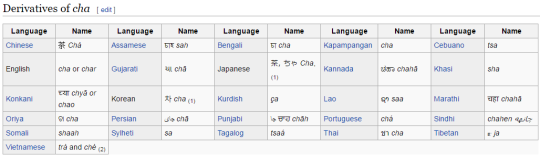
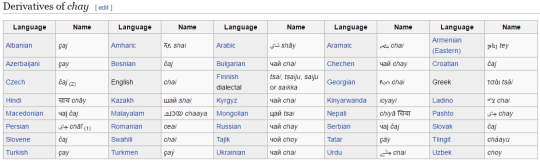
Also, specifically with the chai/tea thing, many languages either use the Malay root and end up with a word that sounds like “tea” (like té in Spanish), or they use the Mandarin root and end up with a word that sounds like “chai” (like cha in Portuguese).

So, can we all stop making fun of this now?

Okay and I’m totally going to jump in here about tea because it’s cool. Ever wonder why some languages call tea “chai” or “cha” and others call it “tea” or “the”? 

It literally all depends on which parts of China (or, more specifically, what Chinese) those cultures got their tea from, and who in turn they sold their tea to. 

The Portuguese imported tea from the Southern provinces through Macau, so they called tea “cha” because in Cantonese it’s “cha”. The Dutch got tea from Fujian, where Min Chinese was more heavily spoken so it’s “thee” coming from “te”. And because the Dutch sold tea to so much of Europe, that proliferated the “te” pronunciation to France (”the”), English (”tea”) etc, even though the vast majority of Chinese people speak dialects that pronounce it “cha” (by which I mean Mandarin and Cantonese which accounts for a lot of the people who speak Chinese even though they aren’t the only dialects).

And “chai”/”chay” comes from the Persian pronunciation who got it from the Northern Chinese who then brought it all over Central Asia and became chai.

(Source

This is the post that would make Uncle Iroh join tumblr

Tea and linguistics. My two faves.

Okay, this is all kinds of fascinating!

Quality linguistic research

rileyjaydennis:

feynites:

runawaymarbles:

averagefairy:

old people really need to learn how to text accurately to the mood they’re trying to represent like my boss texted me wondering when my semester is over so she can start scheduling me more hours and i was like my finals are done the 15th! And she texts back “Yay for you….” how the fuck am i supposed to interpret that besides passive aggressive

Someone needs to do a linguistic study on people over 50 and how they use the ellipsis. It’s FASCINATING. I never know the mood they’re trying to convey.

I actually thought for a long time that texting just made my mother cranky. But then I watched my sister send her a funny text, and my mother was laughing her ass off. But her actual texted response?

“Ha… right.”

Like, she had actual goddamn tears in her eyes, and that was what she considered an appropriate reply to the joke.I just marvelled for a minute like ‘what the actual hell?’ and eventually asked my mom a few questions. I didn’t want to make her feel defensive or self-conscious or anything, it just kind of blew my mind, and I wanted to know what she was thinking.

Turns out that she’s using the ellipsis the same way I would use a dash, and also to create ‘more space between words’ because it ‘just looks better to her’. Also, that I tend to perceive an ellipsis as an innate ‘downswing’, sort of like the opposite of the upswing you get when you ask a question, but she doesn’t. And that she never uses exclamation marks, because all her teachers basically drilled it into her that exclamation marks were horrible things that made you sound stupid and/or aggressive.

So whereas I might sent a response that looked something like:

“Yay! That sounds great – where are we meeting?”

My mother, whilst meaning the exact same thing, would go:

‘Yay. That sounds great… where are we meeting?”

And when I look at both of those texts, mine reads like ‘happy/approval’ to my eye, whereas my mother’s looks flat. Positive phrasing delivered in a completely flat tone of voice is almost always sarcastic when spoken aloud, so written down, it looks sarcastic or passive-aggressive.

On the reverse, my mother thinks my texts look, in her words, ‘ditzy’ and ‘loud’. She actually expressed confusion, because she knows I write and she thinks that I write well when I’m constructing prose, and she, apparently, could never understand why I ‘wrote like an airhead who never learned proper English’ in all my texts. It led to an interesting discussion on conversational text. Texting and text-based chatting are, relatively, still pretty new, and my mother’s generation by and large didn’t grow up writing things down in real-time conversations. The closest equivalent would be passing notes in class, and that almost never went on for as long as a text conversation might. But letters had been largely supplanted by telephones at that point, so ‘conversational writing’ was not a thing she had to master. 

So whereas people around my age or younger tend to text like we’re scripting our own dialogue and need to convey the right intonations, my mom writes her texts like she’s expecting her Eighth grade English teacher to come and mark them in red pen. She has learned that proper punctuation and mistakes are more acceptable, but when she considers putting effort into how she’s writing, it’s always the lines of making it more formal or technically correct, and not along the lines of ‘how would this sound if you said it out loud?’

the linguistics of written languages in quick conversational format will never not be interesting to me like it’s fascinating how we’ve all just silently learned what an ellipsis or exclamation mark implies and it’s totally different in different communities or generations or whatever

I remember in high school, the early 2000s, my friends and I would still pass notes. Well, we would pass a single piece of paper back and forth with conversation. Not only did we use conversational English, but since we were all artists and weebs, we also had little chibi avatars on the side conveying additional emotions. Nothing fancy, just a cute face and a pair of hands if needed, but it’s fascinating to see how even that has developed. Even before chat and emojis were widely used, we were using them in written conversations for clarity.

brunhiddensmusings:

cameoamalthea:

brunhiddensmusings:

threeraccoonsinatrenchcoat:

badgerofshambles:

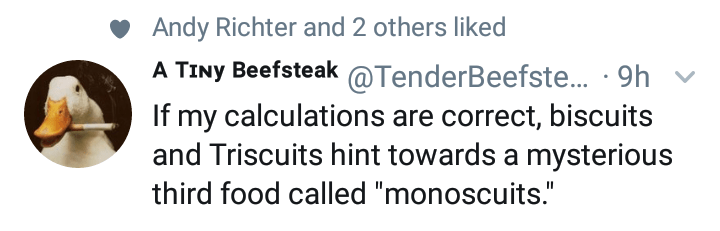
a singular scuit. just one. 

an edible cracker with just one side. mathematically impossible and yet here I am monching on it.

‘scuit’ comes from the french word for ‘bake’, ‘cuire’ as bastardized by adoption by the brittish and a few hundred years

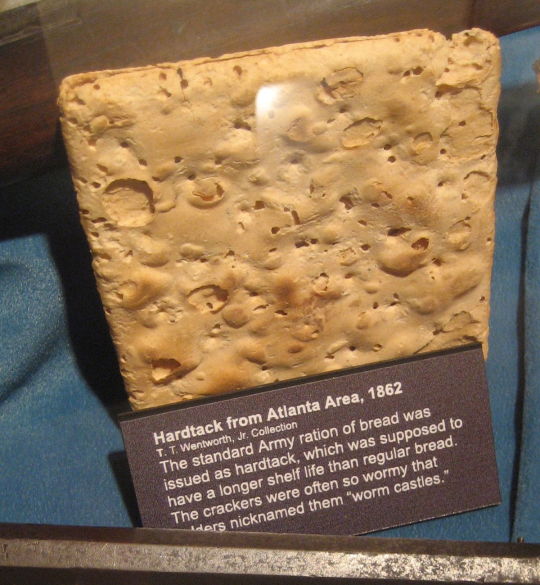
‘biscuit’ meant ‘twice-baked’, originally meaning items like hardtack which were double baked to dry them as a preservative measure long before things like sugar and butter were introduced. if you see a historical doccument use the word ‘biscuit’ do not be fooled to think ‘being a pirate mustve been pretty cool, they ate nothing but cookies’ – they were made of misery to last long enough to be used in museum displays or as paving stones

‘triscuit’ is toasted after the normal biscuit process, thrice baked

thus the monoscuit is a cookie thats soft and chewy because it was only baked once, not twice

behold the monoscuit/scuit

Why is this called a biscuit:

when brittish colonists settled in the americas they no longer had to preserve biscuits for storage or sea voyages so instead baked them once and left them soft, often with buttermilk or whey to convert cheap staples/byproducts into filling items to bulk out the meal to make a small amount of greasy meat feed a whole family. considering hardtack biscuits were typically eaten by dipping them in grease or gravy untill they became soft enough to eat without breaking a tooth this was a pretty short leap of ‘just dont make them rock hard if im not baking for the army’ but didnt drop the name because its been used for centuries and people forgot its french for ‘twice baked’ back in the tudor era, biscuit was just a lump of cooked dough that wasnt leavened bread as far as they cared

thus the buttermilk biscuit and the hardtack biscuit existed at the same time. ‘cookies’ then came to america via german and dutch immigrants as tiny cakes made with butter, sugar/molasses, and eggs before ‘tea biscuits’ as england knew them due to the new availability of cheap sugar- which is why ‘biscuit’ and ‘cookie’ are separate items in america but the same item in the UK

the evolution of the biscuit has forks on its family tree

crysta1-queer:

shotgunheart:

marsnooze:

i love seeing professors getting super excited before talking about the only infix in English it’s so funny

#an infix is an affix that happens in the middle of the word#an affix is a prefix or suffix#our only infix is “fucking” lmao#like fan-fucking-tastic#or abso-fucking-lutely#it’s just so funny the profs always get a huge smile#and gets all cheeky

THIS IS SO COOL.
Like I knew that it was a thing, I just didn’t realize it was such a UNIQUE THING.

we actually have more than one, depending on the variety of english you speak! they mostly tend to be profanity
for example, in australian and british english, another infix is “bloody”
abso-bloody-lutely, mate

also, in hip hop slang, we have “iz” or “izn”
like, shiznit for shit
and “ma”, “whose location in the gives a word an ironic pseudo-sophistication, as insophistimacated, saxomaphone, and edumacation”

They’re not extremely rare, they just happen to be extremely rare in English.

Here are some other examples.