• It was prob some rogue who did it, just because he was bitter and wanted to make Batman miserable for a day.
• Damian, stumbling around in his new 6’2 body: “Why do I suddenly feel like a goth skyscraper.” *trips over his vampire cape*
• Bruce is so beyond caring at this point, he doesn’t even react much besides frowning so deeply his face cramps up and sighing the heaviest sigh he’s ever sighed. Last time he got body-swapped was almost two months ago when he spent a week in Hal’s body. He was so close to breaking his record of Longest Time Without Getting Spelled.
• When Bruce and Damian return from patrol, Dick immediately runs up to Damian. Dick: “Hey, Dami! How’s my favorite little munchkin doing?” Bruce, his deep man voice coming from Damian’s bean-like body: “Fine, and you?” Dick: o__o
• Alfred, ever the comedian, insists that Bruce wears Damian’s footie pajamas instead of his usual ginormous three-piece-suits because “I will not have any child of mine wearing ill-fitting clothes, Master Bruce. And besides, this one has little Thomas the Train characters on it.”
• Damian, standing in front of Bruce’s floor-length mirror in one of the identical gray suits he found in his dad’s closet: “Yes, it is I, the one and only Bruce Wayne. What is that, Shelby? Go to Lex Luthor’s pool party with you? Why of course, you know I can never turn down a free sundae bar. Perhaps we can even drink champagne in the ball pit and visit the pet store to pet all the puppies because, as an adult, I now have that privilege.”
• Tim, not yet aware of the switcharoo situation: “Hey, Bruce.” Damian: “Choke on a spoon and die.” Tim, crying: “B-Bruce??”
i was reading yesterday on quora an answer to “If Batman were real, who do you think his secret identity would be in the real world?” and the guy one of the answers suggested had a company motto literally be “don’t be evil” and i’m tearing up thinking of bruce having the same motto for wayne enterprises, despite the different sub-divisions. that’s the exact kind of passive-aggressiveness he’s capable of
reporter: mr. wayne, how come Wayne Tech’s motto is Don’t Be Evil? how does it fit— bruce: it’s simple: don’t be evil 🙂 reporter: yes, we got that much but— bruce, staring straight into the lens of the camera: evil? don’t be it, pal :))
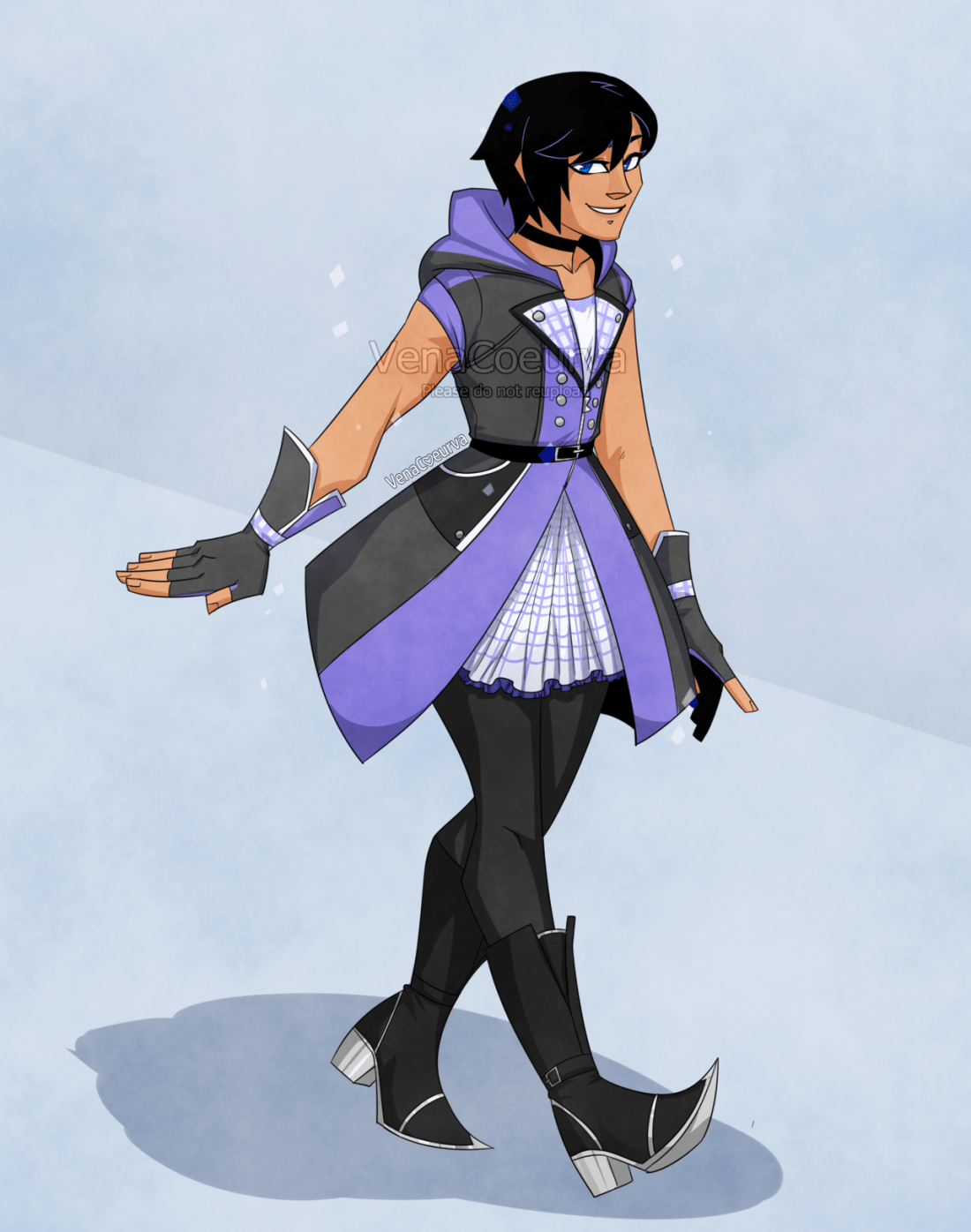
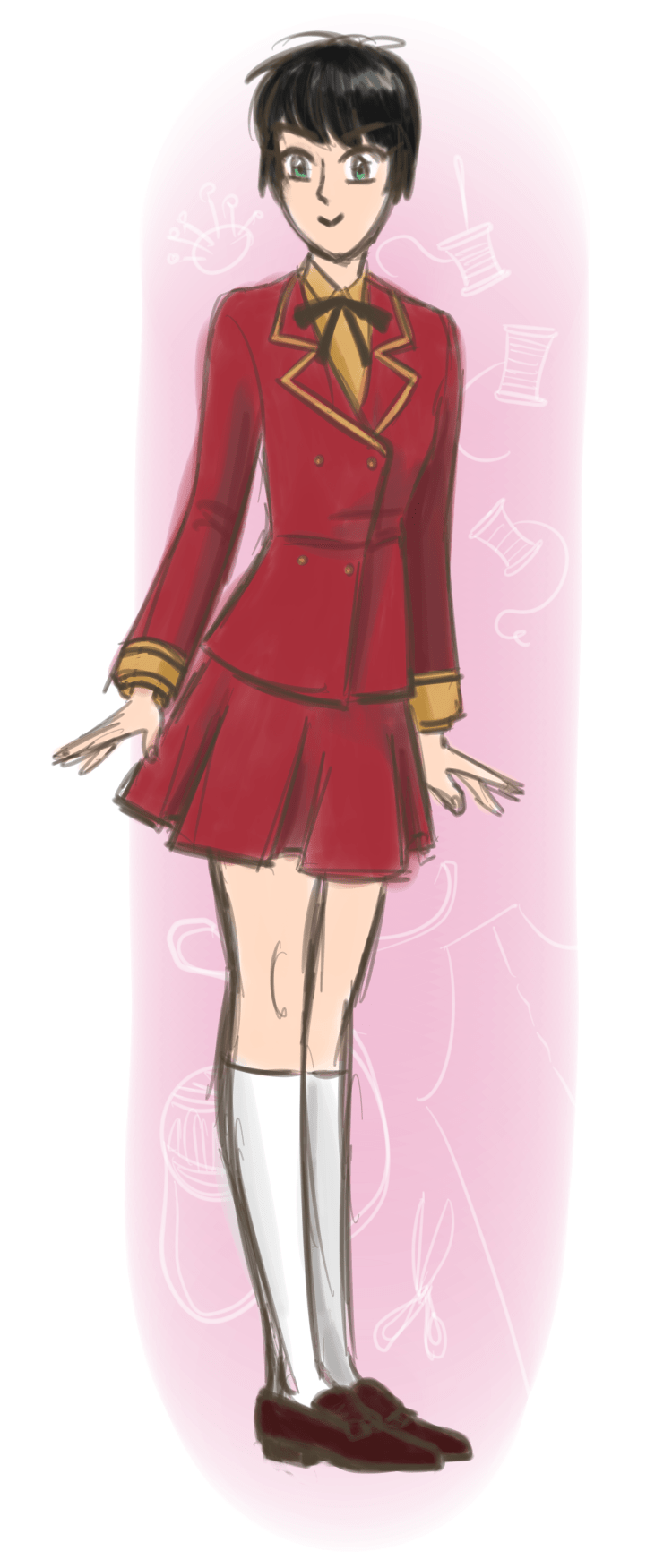
Back before we really had a grasp on the clothing aesthetics for KH3, I drew a speculative outfit for Xion, so I made another one! It’s very fun to do lol
-Don’t reupload/edit/use without proper credit, ask first please-
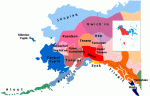
The Tlingit are a native people who inhabit the southeastern coast of Alaska and Canada in the Pacific Northwest. An ingenious an resourceful people, the Tlingit were expert weapon and armor makers crafting wooden helmets and suits of armor made from animal skins woven with wooden slats. Originally the Tlingit had relatively advanced metallurgical skills, working tools in copper and rudimentary iron working. After European contact they quickly learned more advanced metallurgical skills such as advanced iron working and steel-making. Along with the neighboring Haida, the Tlingit were noted for crafting high quality iron and steel daggers. They even made swords in excess of 20 inches in blade length, being one of the few Native American cultures with a sword making tradition.
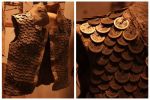
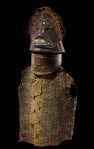
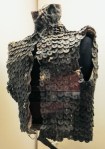
In the 18th century the Russians set up the Pacific Maritime Trade, a trading network in which Russian merchants would acquire furs from the Pacific Northwest and trade them for goods in China, which in turn could be traded in Europe and elsewhere. The Tlingit became active participants in this commercial enterprise, trading furs with the Russians for Chinese goods such as porcelain, silk, and tea. One item that particularly piqued their interest were Chinese coins. Made of bronze the coins typically had a hole in them so that they could be carried on a string that was attached to a sash or belt, since purses and moneybags were never popular in Chinese fashion. For the Chinese and Russians the coins were a form of currency, but for the Tlingit the coins had a entirely different purpose altogether. The Tlingit began sewing the coins onto animal hide vests crafting intricate suits of scale armor. The armor offered excellent protection against arrows, blades, and blunt weapons, and may have offered some modest protection against early firearms. Often these suits of armor were imbued with special mystical and magical properties, giving Tlingit warriors a psychological edge in combat.
In the 19th century British traders began to take up the trade, and finally Americans became dominant in the Pacific fur trade after Russia sold Alaska to the United States in 1867. Armor crafting from Chinese coins continued well into the late 19th century, being further bolstered by Chinese immigration to the west coast in the mid 1800s with the California gold rush. Today the Tlingit still produce beautiful knives, swords, and suits of armor, keeping alive a tradition which their forefathers had done before them.
She shows throughout the movie that she is forgetful, impulsive, emotional, distracted, always late, creative, nonconventional, awkward, hard working, and very hard on herself. She constantly tries to fit into a society that really doesn’t accommodate someone like her.
Throughout the movie she works as hard as she can, but always comes up short. It is only when she embraces her true self and uses what she has come to know as her weaknesses to her advantage (creativity, nonconventional thinking, impulsivity, emotional reactivity, etc.) that she turns things around and actually saves her country from its biggest threat.
She reveals that she didn’t go to the army to save her father, but rather to prove that she could do something right for once and be someone worthwhile. Her self esteem is fragile from start to finish and she never truly accepts that she can do something right (until the end, arguably) because she’s so used to being a screwup. The scenes at the end where the crowd bows to her and her father hugs her choke me up to this day because she finally gains acceptance for who she is and what she can do, and she’s never felt that before.
Basically what I’m saying is this: Mulan is a character with ADHD who displays a lot of the internal turmoil that people with ADHD actually feel. She compensates for her weaknesses, feels shame for being different, feels the sting of rejection when she fails to meet expectations, and has a hard time accepting herself and her achievements. She doesn’t bounce off the walls like the stereotype of ADHD is always portrayed, but she is a good example of the actual effects of unidentified ADHD on a woman who just wants to “prove that she can do something right” for once.
when people tell me “wow you’re so sharp, you think of everything” yes, I do. I quite literally have thoughts of everything in my head at one time. help
Concept: A dystopian novel where the government is able to read the minds of its citizens in order to spy on them. The protagonist is a person with ADHD and the mind-reading technology doesn’t work on them because their thoughts are too disjointed and change so rapidly that they’re impossible to read.







 DarkestElemental616