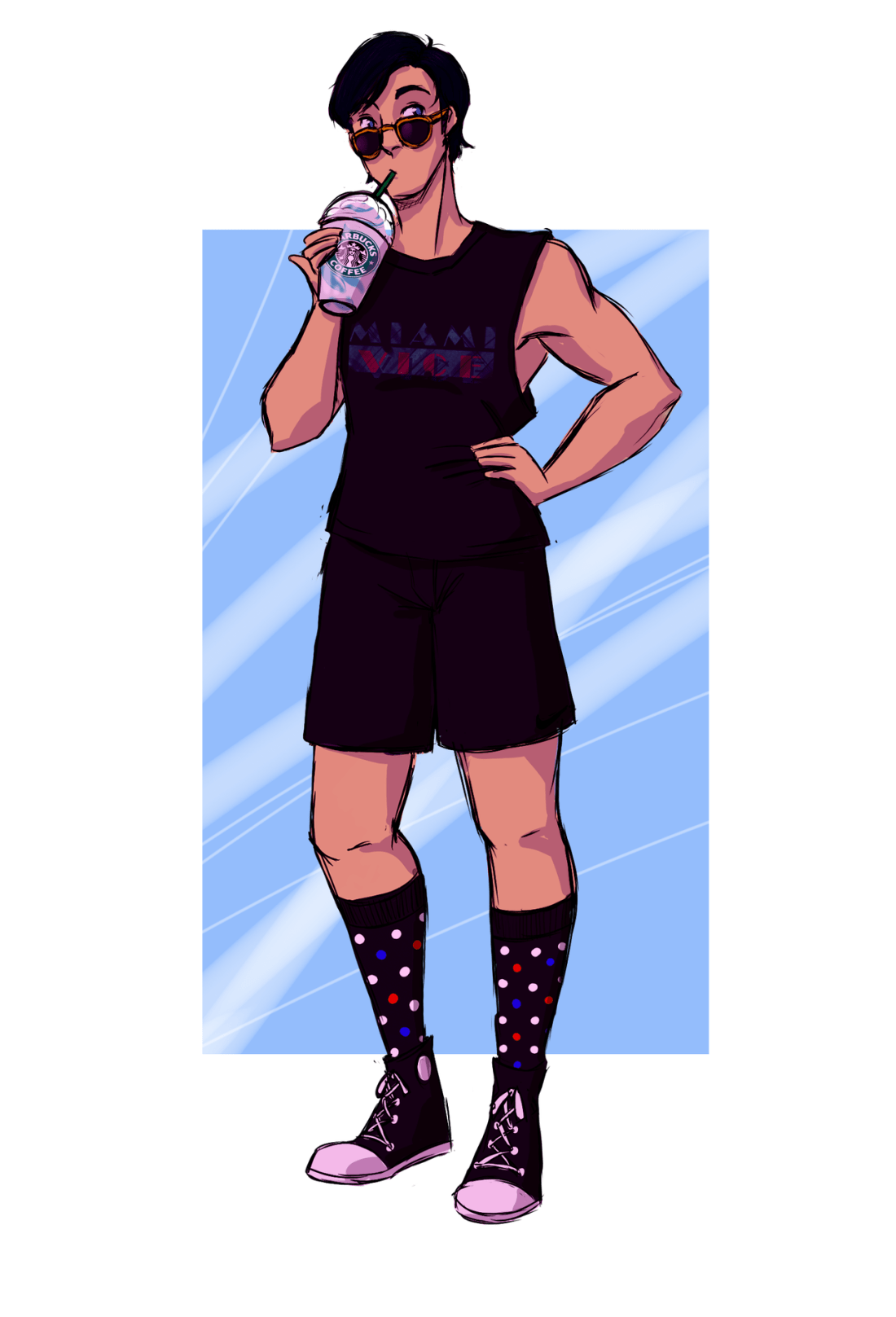
I saw these glorious photos of Chris Pine and concluded they had extremely Big Dick Energy, so who better to model them than the Dickman himself? Figures that my first Dick pic would be a complete shitpost.
Wrong DC character, but I can’t imagine Steve Trevor in that myself
Starbucks in the DCU has drinks for each of the Batfam. Tim hates that the Red Robin is all strawberry syrup and not just fifty shots of espresso. The Nightwing is bubblegum syrup and 90% diabetes.
Please be aware that “gypsy costumes” are RACIST CARICATURES!
And you guessed it, blame white folks for this image. Long story short, when the camera became “mobile” (they could more easily move it from place to place) Europeans traveled all over the Asian continent.
The photographers fetishized and placed the natives in costumes and outfits THEY found attractive and “sexy”, NOT the natives. MANY populations are victims of this, the Roma included.
Please, do NOT buy these racist outfits. IT IS JUST AS BAD AS SOMEONE WEARING BLACK FACE!
This is a really good article about how quickly people actually die from cuts and punctures inflicted by swords and knives. However, it’s really really long and I figured that since I was summarizing for my own benefit I’d share it for anyone else who is writing fiction that involves hacking and slashing your villain(s) to death. If you want the nitty gritty of the hows and whys of this, you can find it at the original source.
…even in the case of mortal wounds, pain may not reach levels of magnitude sufficient to incapacitate a determined swordsman.
Causes of death from stabs and cuts:
massive bleeding (exsanguination) – most common
air in the bloodstream (air embolism)
suffocation (asphyxia)
air in the chest cavity (pneumothorax)
infection
Stabbing vs cutting:
Stabbing someone actually takes very little force if you don’t hit bone or hard cartilage.
The most important factor in the ease of stabbing is the velocity of the blade at impact with the skin, followed by the sharpness of the blade.
Stabbing wounds tend to close after the weapon is withdrawn.
Stabbing wounds to muscles are not typically very damaging. Damage increases with the width of the blade.
Cutting wounds are typically deepest at the site of initial impact and get shallower as force is transferred from the initial swing to pushing and pressing.
Cutting wounds have a huge number of factors that dictate how deep they are and how easily they damage someone: skill, radial velocity, mass of the blade, and the size of the initial impact.
Cutting wounds along the grain of musculature are not typically very damaging but cutting wounds across the grain can incapacitate.
Arteries vs veins:
Severed veins have almost zero blood pressure and sometimes even negative pressure. They do not spurt but major veins can suck air in causing an air embolism.
Cutting or puncturing a vein is usually not fatal.
Severed arteries have high blood pressure. The larger arteries do spurt and can often cause death due to exsanguination.
Body parts as targets:
Severing a jugular vein in the neck causes an air embolism and will make the victim collapse after one or two gasps for air.
Severing a carotid artery in the neck cuts off the blood supply to the brain but the victim may be conscious for up to thirty seconds.
Stabbing or cutting the neck also causes the victim to aspirate blood that causes asphyxiation and death.
Severing a major abdominal artery or vein would cause immediate collapse, but this takes a fairly heavy blade and a significant amount of effort because they are situated near the spine.
Abdominal wounds that only impact the organs can cause death but they do not immediately incapacitate.
Severing an artery in the interior of the upper arm causes exsanguination and death but does not immediately incapacitate.
Severing an artery in the palm side of the forearm causes exsanguination and death but does not immediately incapacitate.
Severing the femoral artery at a point just above and behind the knee is the best location. Higher up the leg it is too well protected to easily hit. This disables and will eventually kill the victim but does not immediately incapacitate.
Cutting across the muscles of the forearm can immediately end the opponent’s ability to hold their weapon.
Cutting across the palm side of the wrist causes immediate loss of ability to hold a weapon.
Stab wounds to the arm do not significantly impact the ability to wield a weapon or use it.
Cuts and stab wounds to the front and back of the legs generally do not do enough muscle damage to cause total loss of use of that leg.
Bone anywhere in the body can bend or otherwise disfigure a blade.
The brain can be stabbed fairly easily through the eyes, the temples, and the sinuses.
Stabs to the brain are more often not incapacitating.
The lungs as targets:
Slicing into the lung stops that lung from functioning, but the other lung continues to function normally. This also requires either luck to get between the ribs or a great deal of force to penetrate the ribs.
Stabbing the lung stops that lung from functioning, but the other lung continues to function normally. It is significantly easier to stab between ribs than to slice.
It is possible to stab the victim from the side and pass through both lungs with an adequate length blade. It is very unlikely that this will happen with a slicing hit.
“Death caused solely by pneumothorax is generally a slow process, occurring as much as several hours after the wound is inflicted.”
Lung punctures also typically involve the lung filling with blood, but this is a slow process.
The heart as a target:
I’m just going to quote this paragraph outright with a few omissions and formatting changes for clarity because it’s chock-full of good info:
…[stabbing] wounds to the heart the location, depth of penetration, blade width, and the presence or absence of cutting edges are important factors influencing a wounded duelist’s ability to continue a combat.
Large cuts that transect the heart may be expected to result in swift incapacitation…
…stab wounds, similar to those that might be inflicted by a thrust with a sword with a narrow, pointed blade may leave a mortally wounded victim capable of surprisingly athletic endeavors.
Essentially, the heart can temporarily seal itself well enough to keep pressure up for a little while if it’s a simple stab. The arteries around the heart, while they are smaller and harder to hit, actually cause incapacitation much more quickly.
These are two of the most powerful moments in the X-Men movies. This is how you define Magneto. A man scarred and impacted by what he endured in the camps. A man who endured the unendurable.
I never saw him as a villain. I never saw him as a monster. I saw him as a man who wanted to do everything – to move heaven and earth – to keep his people safe.
next time a doctor doubts your adhd diagnosis because of your “too advanced” level of education / your good grades, turn the question around and ask them how they got their medical license despite being a complete moron. u know, power move and all that
technology related sensory memories from my childhood
sliding the metal cover on floppy disks
the slight resistance of inserting cassette and video tapes
ripping off the strips of holed paper off of dot matrix printer paper
rolling the wheel on a disposable camera to take another photo
The heaviness and rubber texture of the roller ball in a computer mouse, and the little ring of lint
Unkinking the curly cord of a telephone while you talked
The -peww sound and slowly fading image of a crt monitor turning off, and then running your finger through the static on the dusty glass
The crunch of opening or closing a plastic Disney vhs cover
The sound effects in kidpix
Extending and collapsing metal antennas and using them as magic wands
…God, it is so weird these things aren’t around any more. Cause it’s true, the sensations are so distinct. It’s bizarre to think about missing these tiny relics.















 DarkestElemental616