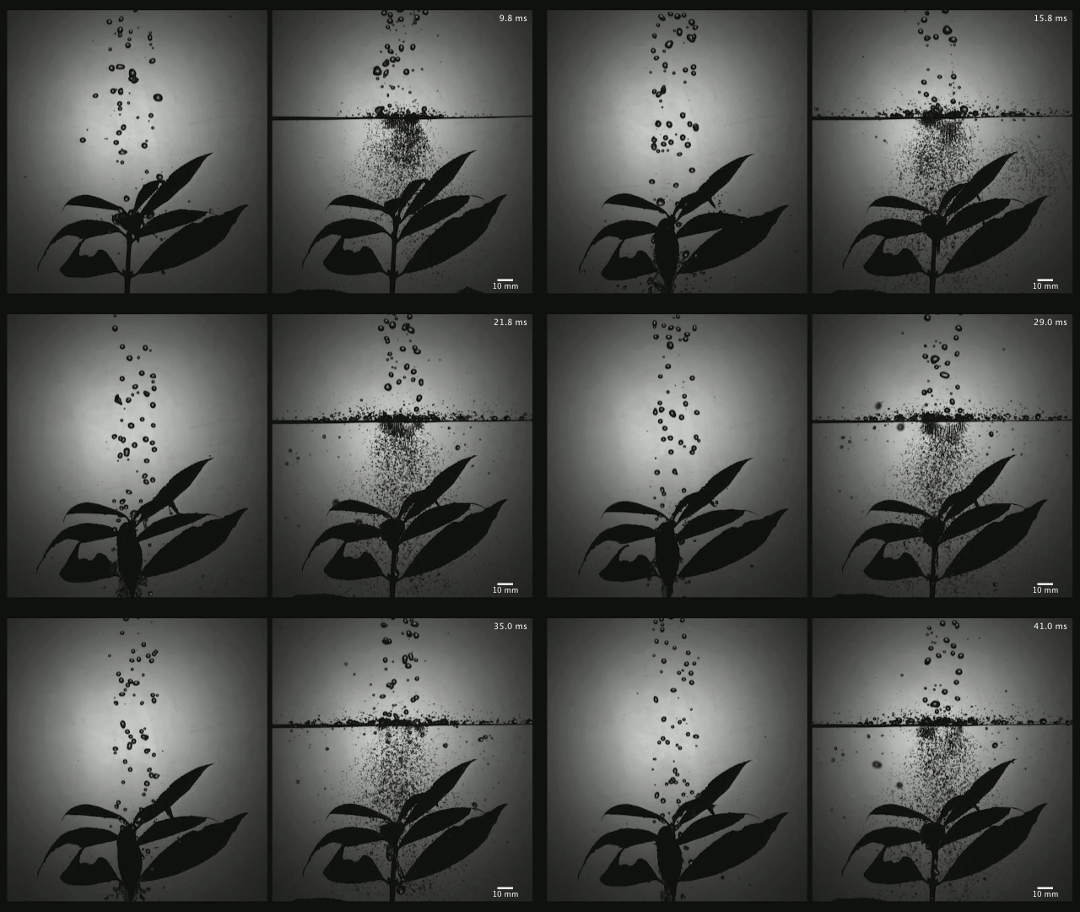
Lots of applications – from rocket engines to ink jet printing – require breaking large droplets into smaller ones, so there are many methods to do this. Some techniques rely on fluid instabilities, others use ultrasonic vibration. But one of the most effective methods may also be the simplest: placing a mesh between large drops and their target.
That’s the idea at the heart of this new study, which uses a wire mesh to break large droplets into a spray of finer ones 1000 times smaller. The target application is agricultural spraying, and the researchers argue that their method would allow farmers to treat their crops effectively with fewer chemicals and less run-off. Drops impacting the mesh form a narrow cone over the plant, and the smaller, slower droplets are better at sticking to the plant instead of bouncing away. They’re also less likely to injure crops, since they don’t disturb the leaves the way larger drops do. (Image and research credit: D. Soto et al.; via MIT News; submitted by Omar M.)
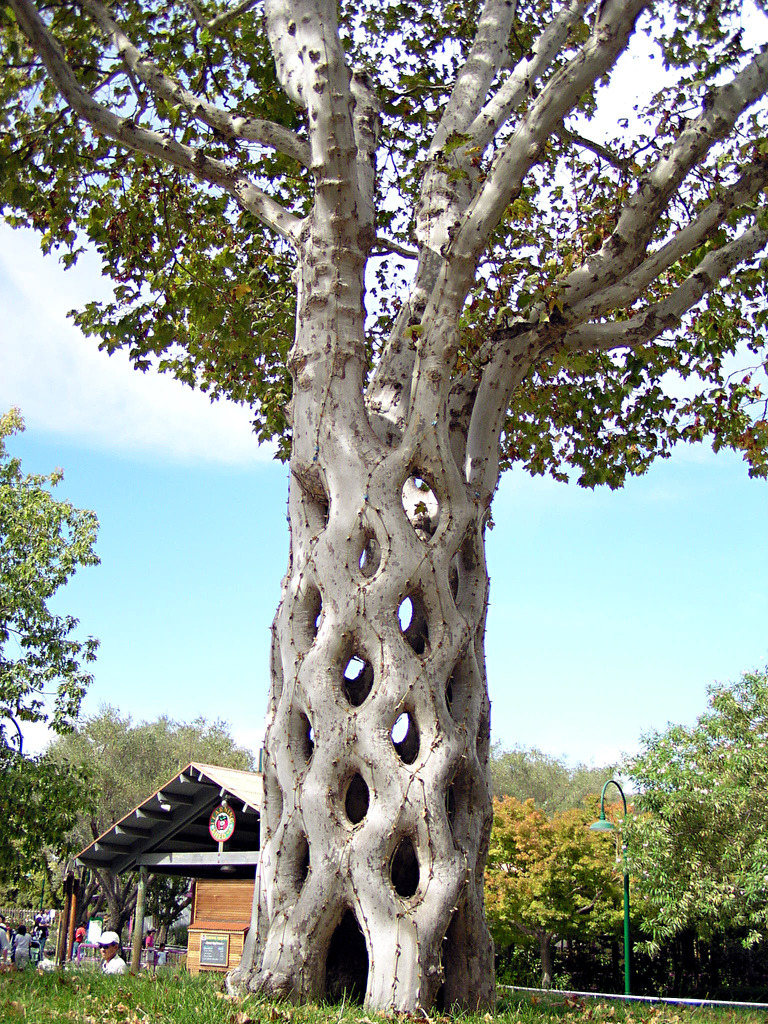
Circus Tree: Six individual sycamore trees were shaped, bent, and braided to form this.
Actually pretty easy. Trees don’t reject tissue from other trees in the same family. You bend the tree to another tree when it is a sapling, scrape off the bark on both trees where they touch, add some damp sphagnum moss around them to keep everything slightly moist and bind them together. Then wait a few years- The trees will have grown together.
You can use a similar technique to graft a lemon branch or a lime branch or even both- onto an orange tree and have one tree that has all three fruits.
Frankentrees.
As a biologist I can clearly state that plants are fucking weird and you should probably be slightly afraid of them.
On that note! At the university (UBC) located in town, the Agriculture students were told by their teacher that a tree flipped upside down would die. So they took an excavator and flipped the tree upside down. And it’s still growing. But the branches are now the roots, and the roots are now these super gnarly looking branches. Be afraid.
But Vi, how can you mention that and NOT post a picture? D:
I am both amazed and horrified of nature as we all should be
I love how trees are like “fuck it, I’ll deal” at literally everything. Forest fire? Cool, my seeds’ll finally grow. Upside down? Branches, suck, roots, leave. What’s this new branch? Eh, welcome to the tree buddy.
I need to be more like tree
I continue to fear and respect out arboreal overlords.
what kind of professor did these students have that they needed to prove him wrong so badly that they literally dug up a tree, flipped it and put it back in the ground?
Sounds like y’all’ve never heard about the Tree of 40 Fruits. Well, it’s exactly as it sounds. Sam Van Aken, an artist based in New York, decided to try his hand at grafting (e.g. the process by which you attach the branches of a different tree to a host tree).
As artists are inclined to do he decided to push some limits and over the course of a few years he grafted over 40 different fruit onto the host “
including almond, apricot, cherry, nectarine, peach and plum varieties.”
It has a fruiting period lasting from July to October and this is what it looks like when blossoming.
Shit’s tight yo.
Also we have a group called the Guerrilla Grafters. A group who started in San Fransisco with the goal of grafting fruiting branches onto non-fruiting trees of the same type.
Most cities have fruit trees that simply don’t produce fruit because having all these would be a mess and inadvertently providing unregulated food to people comes with a lot of legal risks I suppose. These grafters seem to think otherwise and have taken it upon themselves to try and bring fruit trees back to urban areas.
HOLY SHIT
THE LAST ONE
Also of note: Cities’ refusal to plant only non-fruit-bearing trees are only planting male trees: aka the pollen producers. So the guerrilla grafters are providing food AND cleaner air!
A 3D mapping model of a chunk of the universe – 380,000 laser-etched dots in a glass sphere each represent a galaxy, and the diameter is 800 million lightyears.(Source)
We out here creating a lil mini universes and shit
this is some MIB bullshit right here
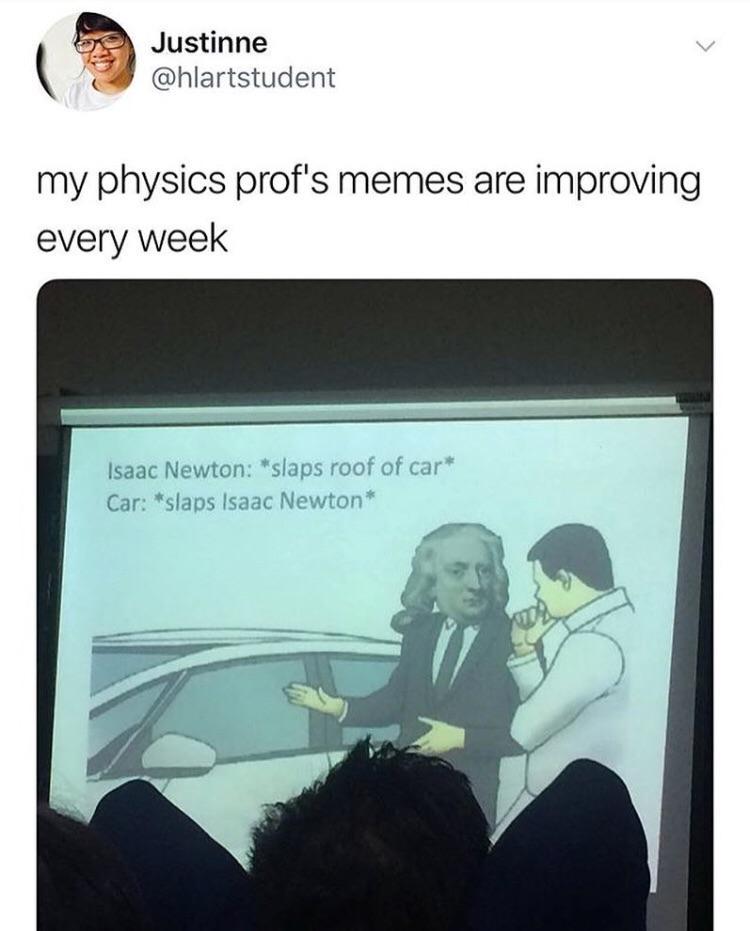
This is actually really fucking clever, because Newton’s Third Law states that for every action there is an equal and opposite reaction.
[Image description: “My physics prof’s memes are improving every week” over an image of the car salesman meme. The meme is as follows:
my thesis involves this principle! in fluids, viscosity (the thickness/stickiness of the fluid) and inertia (the tendency of something to stay in motion when a force is exerted) are in competition. glycerin is incredibly viscous, so the viscosity beats the inertia and the dye doesn’t shift beyond where it is immediately pushed–so exerting an equal and opposite force on the dye just puts it back to its exactly original position.
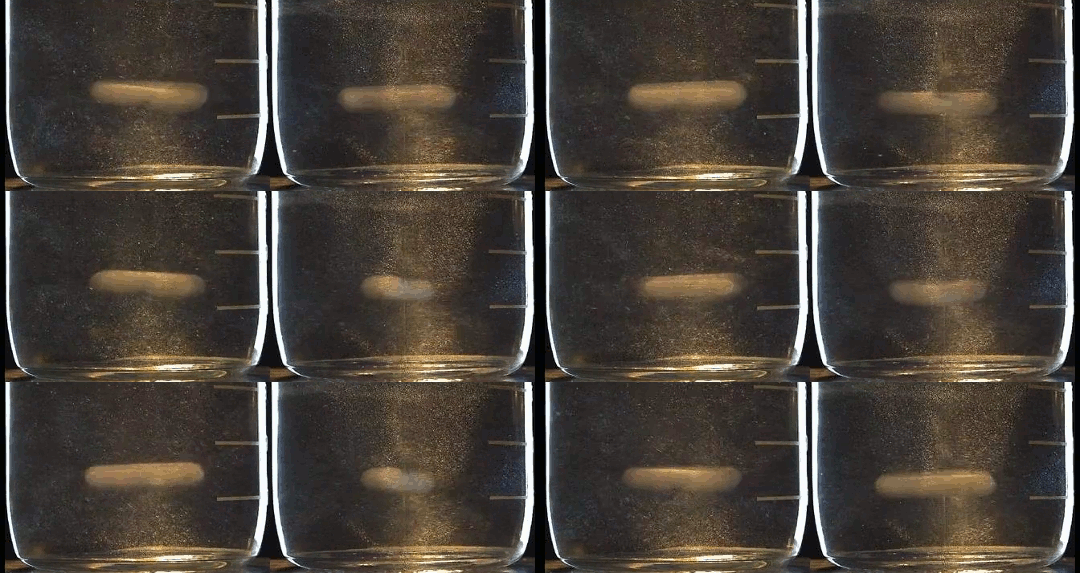
Nearly every lab has a magnetic stirrer for mixing fluids, but this ubiquitous tool still holds some surprises, like its ability to unexpectedly levitate. Magnetic stirrers consist of two main parts, a driving magnet that creates a rotating magnetic field, and a bar magnet – commonly referred to as the flea – that is submerged in the fluid to be stirred. When the driver’s rotating field is active, the flea will spin at the bottom of its container, keeping its magnetic field in sync with the driver.
But if you place the flea in a viscous enough fluid, the drag forces on the flea can pull it out of sync with the driver’s field. Above a certain speed, the flea will jump so that its field repulses the driver’s. That makes the flea levitate as it spins. Depending on the interplay of viscous and magnetic forces, that spin can be unstable (left) or stable (right). The researchers suggest that this peculiar behavior could help artificial swimmers propel themselves or lead to new methods for measuring fluid viscosity. (Image and research credit: K. Baldwin et al.; via APS; submitted by Kam-Yung Soh)
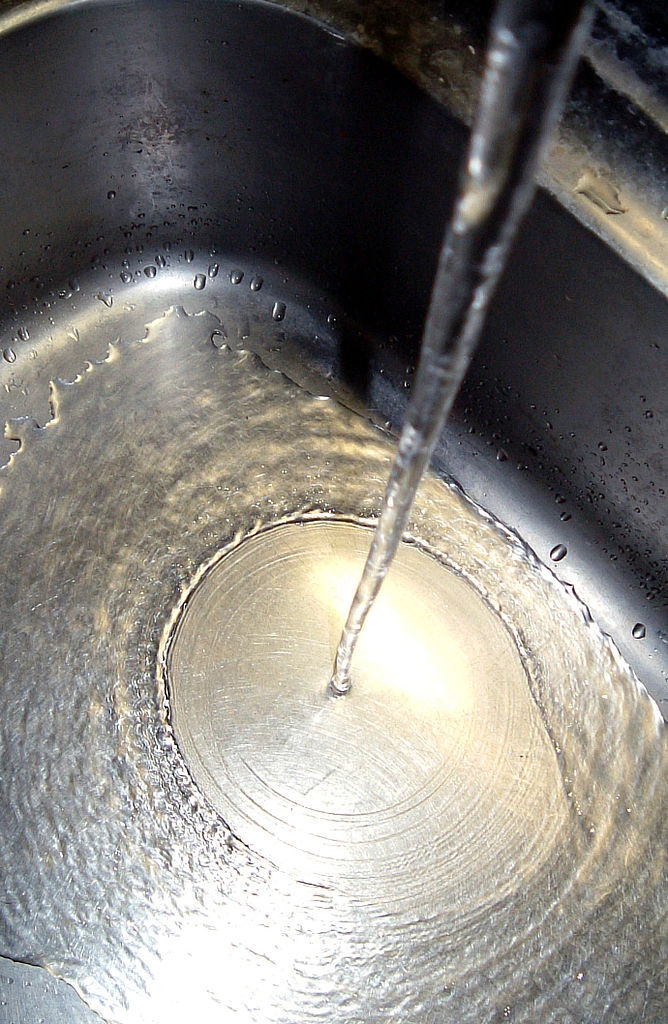
You’ve seen it a million times. When you turn on your kitchen faucet, the falling water forms a distinctive ring – known as a hydraulic jump – in the bottom of your sink. First described by Leonardo da Vinci, this phenomenon has been studied for centuries, and, for nearly all of that time, scientists assumed that gravity played a major role, even in kitchen-sink-sized hydraulic jumps. But that’s not the case.
A newly published study shows that gravity can’t be a major player in setting the radius of these small-scale hydraulic jumps because they form the same whether the jet impinges from above, below, or sideways. Instead, the researchers found that surface tension and viscosity are the parameters that determine the jump’s formation. It’s not every day that you get to overturn a centuries-old theory in physics! (Image credit: J. Kilfiger; research credit: R. Bhagat et al.; via Silicon Republic; submitted by Patrick D.)
one of the oldest and arguably the most important museum in Brazil is burning to the ground as we speak. home to the portuguese royal family from 1808 to 1821, the Museu Nacional stored fossils, meteorites, pre-historic human skeletons and a variety of artefacts related to natural history. it holds two centuries of latin & brazilian history and now it’s all gone.
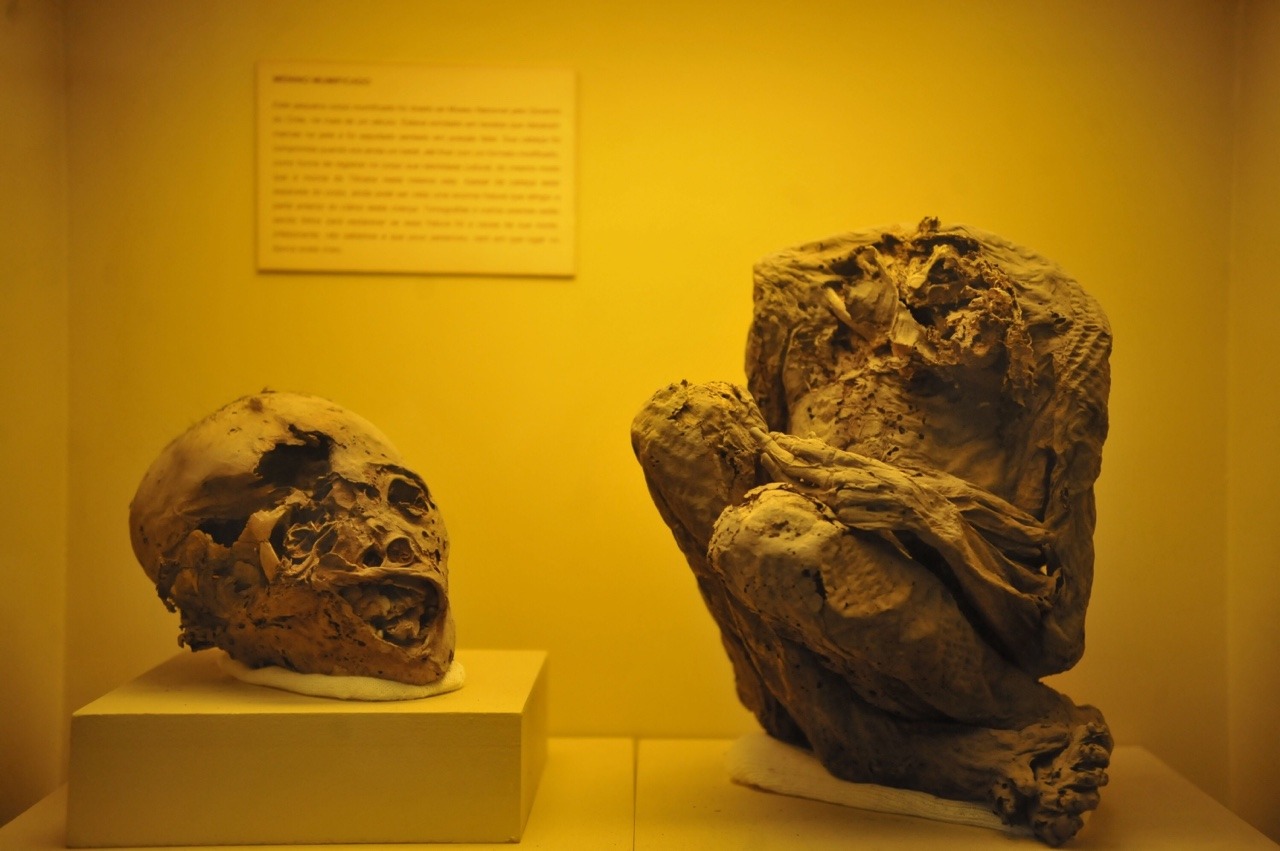
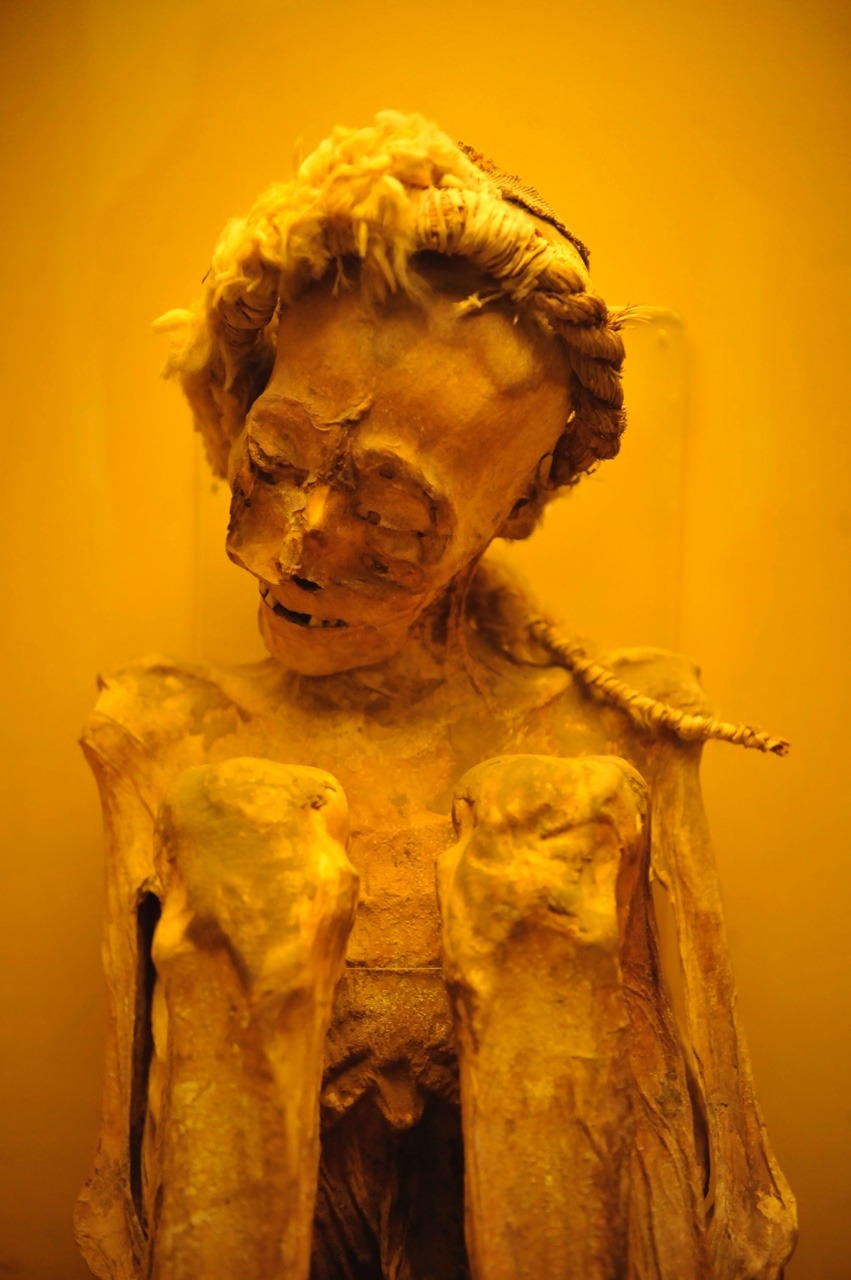
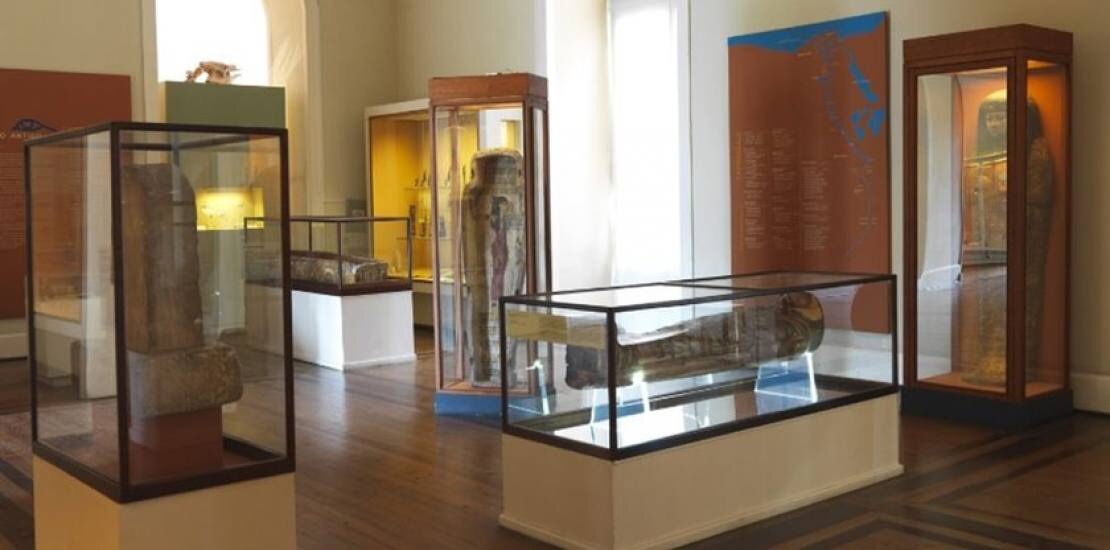
some of the things that are now lost forever: the largest collection of egyptian artefacts in latin america; the skeleton of the largest flying reptile ever found in Brazil; the oldest human fossil ever found in the country, named “Luzia” (over 11.000 y.o) and other 20 million extremely important relics and researches just burned to the ground. never to be seen again.
thanks to our government, of course, who didn’t want to pay the museum the necessary funds to make the essencial maintenances since 2014 (which by the way, costed less than a supreme federal court judge’s sallary: R$520 in a year).
another sad instance where the state’s indifference towards culture and history becomes painfully obvious. this is a massive blow to our cultural legacy.
all that in our independe week. happy independe for us, brazilians, who just lost our history and culture in a fire caused by ignorance and indifference.
in case you’re wondering, this is what the museum used to look like:
this is what it looks like now:
thousands of years of culture lost. happy independence week.
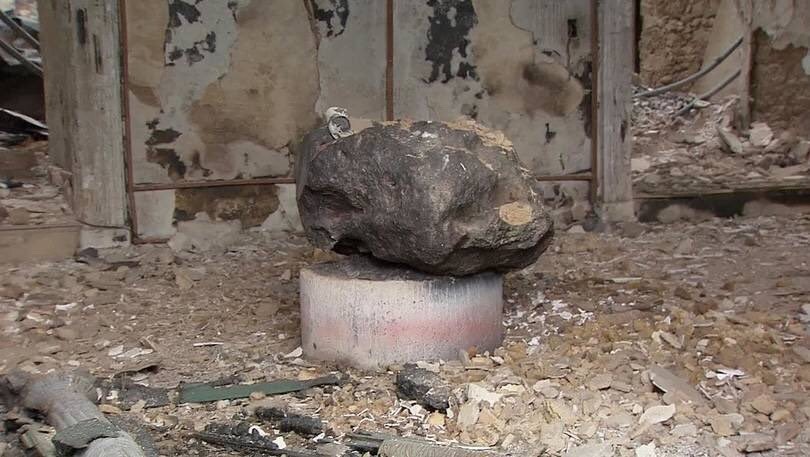
“Authorities say the fire lasted for six hours, causing irreparable damage. To put it bluntly: it’s all gone. A meteorite, that can sustain incredibly high temperatures, was found intact. But other than that, there are apparently no other pieces left. It would not be an understatement to call the Museu Nacional the Brazilian equivalent of the Louvre or the British Museum.”
here is some of the international news saying on this, because most articles and videos are all in portuguese, u can check some of the news in english: (here *new york times*) (here *bbc news*) (here *le monde* for french speaking readers) (here *shorouk news* for people who speak arabian) (here *azteca news* for spanish) (here *corriere della sera* for italian).
it was a natural science and historic museum, there were all sorts of important researches and relics. all burned. this was our culture. our history. the first human fossil found in brazil (mentioned above, Luzia) was so important for science, since it proved that way before indigenous tribes existed in Brazil, there were black people.
this is the place where our first constitution was made and the declaration of independence was signed. our independe day is this friday. heartbroken.












 DarkestElemental616