Oh no, okay the first thing you got to do is get rid of any evidence. Anything that you remember touching or you even faintly think you touched, clean it good. Or you could just burn down the building. Anyway, the body, dump it in a lake, set it on fire or feed it to pigs. Once you finish that, contact me and wait further instructions.
Good to know y’all got my back Jesus Christ
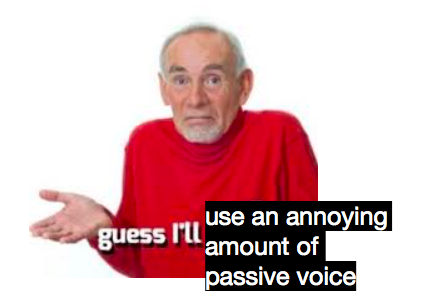
I did kill someone, but relax, they were fictional.
#writerproblems
Arson is a terrible way to dispose of a body. The police are more likely to actively pursue a murderer if they also did thousands in property damage (because sadly property is more important than people). My suggestion is to dump the body. Tie them to cinder blocks at the waist, so the weight is around their center of gravity. Then throw them in a lake, preferably as far from the shore as possible. Avoid the sea, because the current will push the body to shore, and avoid water about 20 degrees Celsius, because warm water will cause the body to float regardless of how much weight is on it. Water will also destroy any trace evidence, so you no longer have to worry about that.
I promise I did this research for my novel.
I love the writing community.
Are we writers? Are we murderers? You’ll never know.
Creative Writing Professor at a former college: Welcome to creative writing! By the way,
you will not write fantasy, ghost stories, pranormal, or science fiction
in this class, as this is a creative writing course.”
What the ever loving fuck is with “creative” writing professors who think that speculative fiction of any stripe ISN’T CREATIVE?
I still remember my own creative writing teacher telling me this because he saw the Terry Pratchett book on my desk and got this smug smirk on his face like “aha, gotcha”. He had the nerve to pick it up and call it “popularist fiction”, like somehow being popular and easily accessible made it less inherent in intellectual value.
I had it in my back pack because I did my final thesis on the evolution of mythology and folk tails into fantasy and sci-fi and the societal importance of telling stories (before anyone asks, no I don’t have it, I lost it when I moved continents), and I used Terry Pratchett because there wasn’t a single humanitarian issue the man did not touch on.
Which I told him. And then he kind of floundered and went “ah, well but, it’s…well I mean it’s not exactly high brow”, like neither the fuck was Shakespeare or Dickens you self-important turnip. Dickens was literally selling his stories by the chapter. He was the popular author of his time. Shakespeare was too, he fucking made up words and phrases all the time because the language he needed to express himself didn’t exist in the way he needed it too.
Intellectual elitism is nothing more than a hold over from class warfare and the belief that only certain people should get to be truly educated. And it needs to be smashed.
I think the best piece of character design advice I ever received was actually from a band leadership camp I attended in june of 2017.
the speaker there gave lots of advice for leaders—obviously, it was a leadership camp—but his saying about personality flaws struck me as useful for writers too.
he said to us all “your curses are your blessings and your blessings are your curses” and went on to explain how because he was such a great speaker, it made him a terrible listener. he could give speeches for hours on end and inspire thousands of people, but as soon as someone wanted to talk to him one on one or vent to him, he struggled with it.
he had us write down our greatest weakness and relate it to our biggest strength (mine being that I am far too emotional, but I’m gentle with others because I can understand their emotions), and the whole time people are sharing theirs, my mind was running wild with all my characters and their flaws.
previously, I had added flaws as an after thought, as in “this character seems too perfect. how can I make them not-like-that?” but that’s not how people or personalities work. for every human alive, their flaws and their strengths are directly related to each other. you can’t have one without the other.
is your character strong-willed? that can easily turn into stubbornness. is your character compassionate? maybe they give too many chances. are they loyal? then they’ll destroy the world for the people they love.
it works the other way around too: maybe your villain only hates the protagonist’s people because they love their own and just have a twisted sense of how to protect them. maybe your antagonist is arrogant, but they’ll be confident in everything they do.
tl;dr “your curses are your blessings, and your blessings are your curses” there is no such thing as a character flaw, just a strength that has been stretched too far.
Don’t give me one-sided unrequited love, give me two-sided unwanted love. Both sides are deeply in love with the other and both sides are like ‘fuck, really?? them??? really?’
Okay, this is in incredibly petty nitpick, but: if you’re writing a fantasy setting with same-sex marriage, a same-sex noble or royal couple typically would not have titles of the same rank – e.g., a prince and a prince, or two queens.
It depends on which system of ranking you use, of course (there are several), but in most systems there’s actually a rule covering this scenario: in the event that a consort’s courtesy title being of the same rank as their spouse’s would potentially create confusion over who holds the title by right and who by courtesy, the consort instead receives the next-highest title on the ladder.
So the husband of a prince would be a duke; the wife of a queen, a princess; and so forth.
(You actually see this rule in practice in the United Kingdom, albeit not in the context of a same-sex marriage; the Queen’s husband is styled a prince because if he were a king, folks might get confused about which of them was the reigning monarch.)
The only common situation where you’d expect to see, for example, two queens in the same marriage is if the reigning monarchs of two different realms married each other – and even then, you’d more likely end up with a complicated arrangement where each party is technically a princess of the other’s realm in addition to being queen of her own.
You’ve gotta keep it nice and unambiguous who’s actually in charge!
Okay, I’ve received a whole lot of asks about this post, so I’m going to cover all of the responses in one go:
1. The system described above is, admittedly, merely one of the most common. Other historically popular alternatives include:
The consort’s courtesy title is of the same rank as their spouse’s, with “-consort” appended to it: prince and prince-consort, queen and queen-consort, etc. This is how, e.g., present-day Monaco does it.
The consort is simply styled Lord or Lady So-and-so, and receives no specific title. I can’t think of any country that still does it this way, off the top of my head, but historically it was a thing.
(Naturally, your setting needn’t adhere to any of these, but it would be highly irregular for it to lack some mechanism for clarifying the chain of command.)
2. The reason why the consort of a prince is historically a princess even though those titles are the same rank is basically sexism. This can go a couple of ways:
In many realms, there was no such thing as being a princess by right; the daughter of a monarch would be styled Lady So-and-so and receive no specific title, so the only way to be a princess was to marry a prince.
In realms where women could hold titles by right, typically a masculine title was informally presumed to outrank its feminine counterpart. So, e.g., kings outrank queens, princes outrank princesses, etc.
In either case, no ambiguity exists.
(Interestingly, this suggests that in a more egalitarian setting where masculine titles are not presumed to outrank their feminine counterparts, or vice versa, you’d need to explicitly disambiguate rankings even outside the context of same-sex marriages. Food for thought!)
3. It would also be possible to have two kings or two queens in the same marriage without multiple realms being involved in the case of a true co-monarchy. However, true co-monarchies are highly irregular and, from a political standpoint, immensely complicated affairs. If you’re planning on writing one of those, be prepared to do your research!
4. The next rank down from “countess” is either “viscountess” or “baroness”, depending on which peerage system you’re using.
(Yes, that last one actually came up multiple times. Apparently there are a lot of stories about gay countesses out there!)
This is a really good article about how quickly people actually die from cuts and punctures inflicted by swords and knives. However, it’s really really long and I figured that since I was summarizing for my own benefit I’d share it for anyone else who is writing fiction that involves hacking and slashing your villain(s) to death. If you want the nitty gritty of the hows and whys of this, you can find it at the original source.
…even in the case of mortal wounds, pain may not reach levels of magnitude sufficient to incapacitate a determined swordsman.
Causes of death from stabs and cuts:
massive bleeding (exsanguination) – most common
air in the bloodstream (air embolism)
suffocation (asphyxia)
air in the chest cavity (pneumothorax)
infection
Stabbing vs cutting:
Stabbing someone actually takes very little force if you don’t hit bone or hard cartilage.
The most important factor in the ease of stabbing is the velocity of the blade at impact with the skin, followed by the sharpness of the blade.
Stabbing wounds tend to close after the weapon is withdrawn.
Stabbing wounds to muscles are not typically very damaging. Damage increases with the width of the blade.
Cutting wounds are typically deepest at the site of initial impact and get shallower as force is transferred from the initial swing to pushing and pressing.
Cutting wounds have a huge number of factors that dictate how deep they are and how easily they damage someone: skill, radial velocity, mass of the blade, and the size of the initial impact.
Cutting wounds along the grain of musculature are not typically very damaging but cutting wounds across the grain can incapacitate.
Arteries vs veins:
Severed veins have almost zero blood pressure and sometimes even negative pressure. They do not spurt but major veins can suck air in causing an air embolism.
Cutting or puncturing a vein is usually not fatal.
Severed arteries have high blood pressure. The larger arteries do spurt and can often cause death due to exsanguination.
Body parts as targets:
Severing a jugular vein in the neck causes an air embolism and will make the victim collapse after one or two gasps for air.
Severing a carotid artery in the neck cuts off the blood supply to the brain but the victim may be conscious for up to thirty seconds.
Stabbing or cutting the neck also causes the victim to aspirate blood that causes asphyxiation and death.
Severing a major abdominal artery or vein would cause immediate collapse, but this takes a fairly heavy blade and a significant amount of effort because they are situated near the spine.
Abdominal wounds that only impact the organs can cause death but they do not immediately incapacitate.
Severing an artery in the interior of the upper arm causes exsanguination and death but does not immediately incapacitate.
Severing an artery in the palm side of the forearm causes exsanguination and death but does not immediately incapacitate.
Severing the femoral artery at a point just above and behind the knee is the best location. Higher up the leg it is too well protected to easily hit. This disables and will eventually kill the victim but does not immediately incapacitate.
Cutting across the muscles of the forearm can immediately end the opponent’s ability to hold their weapon.
Cutting across the palm side of the wrist causes immediate loss of ability to hold a weapon.
Stab wounds to the arm do not significantly impact the ability to wield a weapon or use it.
Cuts and stab wounds to the front and back of the legs generally do not do enough muscle damage to cause total loss of use of that leg.
Bone anywhere in the body can bend or otherwise disfigure a blade.
The brain can be stabbed fairly easily through the eyes, the temples, and the sinuses.
Stabs to the brain are more often not incapacitating.
The lungs as targets:
Slicing into the lung stops that lung from functioning, but the other lung continues to function normally. This also requires either luck to get between the ribs or a great deal of force to penetrate the ribs.
Stabbing the lung stops that lung from functioning, but the other lung continues to function normally. It is significantly easier to stab between ribs than to slice.
It is possible to stab the victim from the side and pass through both lungs with an adequate length blade. It is very unlikely that this will happen with a slicing hit.
“Death caused solely by pneumothorax is generally a slow process, occurring as much as several hours after the wound is inflicted.”
Lung punctures also typically involve the lung filling with blood, but this is a slow process.
The heart as a target:
I’m just going to quote this paragraph outright with a few omissions and formatting changes for clarity because it’s chock-full of good info:
…[stabbing] wounds to the heart the location, depth of penetration, blade width, and the presence or absence of cutting edges are important factors influencing a wounded duelist’s ability to continue a combat.
Large cuts that transect the heart may be expected to result in swift incapacitation…
…stab wounds, similar to those that might be inflicted by a thrust with a sword with a narrow, pointed blade may leave a mortally wounded victim capable of surprisingly athletic endeavors.
Essentially, the heart can temporarily seal itself well enough to keep pressure up for a little while if it’s a simple stab. The arteries around the heart, while they are smaller and harder to hit, actually cause incapacitation much more quickly.
If coming from a low-income situation and being adopted into a complicated yet opulent life of wealth and intrigue makes your character a Mary Sue, then that makes Harry Potter a Mary Sue.
A character’s life events don’t make them Mary Sues/Gary Stues; they only fulfill that archetype if they are devoid of imperfections, complexities, and flaws.



 DarkestElemental616